
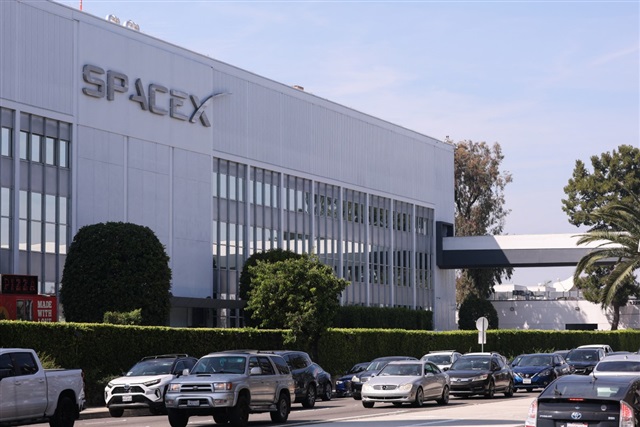
Elon Musk's private rocket company SpaceX, which has fundamentally reshaped modern spaceflight, has confidentially filed for an initial public offering in the US, according to people familiar with the matter. The move could result in the largest stock market listing in history, with a potential valuation exceeding US$1.75 trillion.
According to Reuters, the company — which merged last year with Musk's artificial intelligence startup xAI — plans to host an analyst day on April 21 and offer a visit to xAI's "Macrohard" data center in Memphis, Tennessee, on April 23. A virtual session for financial analysts is scheduled for May 4, according to sources.
Starlink carries the weight
SpaceX dominates private spaceflight, routinely launching more rockets than any other company, while operating Starlink, a satellite broadband network with nearly nine million subscribers and growing defense contracts. Investors see Starlink as the "recurring revenue engine" underpinning the company's enormous valuation.
Angelo Bochanis, a data and index associate at Renaissance Capital, said investors are eager for any exposure to SpaceX, though its valuation could swing dramatically based on public confidence in Musk's vision — similar to what has been seen with Tesla.
AI meets orbit
The merger with xAI, which develops the Grok chatbot, has further intertwined SpaceX's ambitions with artificial intelligence, with the company aiming to extend computing infrastructure into orbit. SpaceX has sought regulatory approval to deploy up to one million solar-powered satellites functioning as orbital data centers — a plan far exceeding any current or proposed satellite deployments. NASA engineers have long speculated about off-planet computing, and SpaceX appears poised to bring that vision closer to reality.
Record IPO in the making
Headquartered in Starbase, Texas, SpaceX's IPO could raise more than US$50 billion, surpassing the 2019 flotation of Saudi Aramco, the current record-holder. The confidential filing allows the company to submit documents privately to regulators, refining disclosures before public scrutiny. Analysts expect a dual-class share structure that would let Musk retain control while raising capital.
A race with no finish line
The IPO comes amid a renewed US space race. NASA is preparing a 10-day lunar mission this week, marking one of the most ambitious American spaceflights in decades. Meanwhile, an increasing number of billionaires and private firms — including Jeff Bezos's Blue Origin — have invested heavily in rockets, satellite networks, and lunar ambitions. Space stocks responded positively: Intuitive Machines jumped 11%, while Planet Labs, AST SpaceMobile, and Rocket Lab each added 6% to 10%.
Despite Musk's polarizing reputation and the complexity of overseeing multiple ventures with a collective value exceeding US$1 trillion, analysts emphasize that SpaceX is operationally mature and technologically advanced, distinguishing it from most startups.
Much of SpaceX's staggering valuation rests on Starlink, its satellite broadband network, but investors are equally captivated by the company's vision of integrating AI with orbital infrastructure. "Starlink is the only element that makes this valuation defensible," said Shay Boloor, chief market strategist at Futurum Equities. "It will serve as the recurring revenue engine, with nine million subscribers, defense contracts, and its own independent data network."
With a projected profit of US$8 billion on US$15 billion to US$16 billion in revenue last year, SpaceX has demonstrated operational viability while pursuing a bold expansion into space-based computing and AI integration. As Wall Street braces for what could be a historic IPO, the offering underscores the growing convergence of technology, finance, and the new space race — a competition with far-reaching implications for communications, national security, and the global digital economy.
Article edited by Jerry Chen