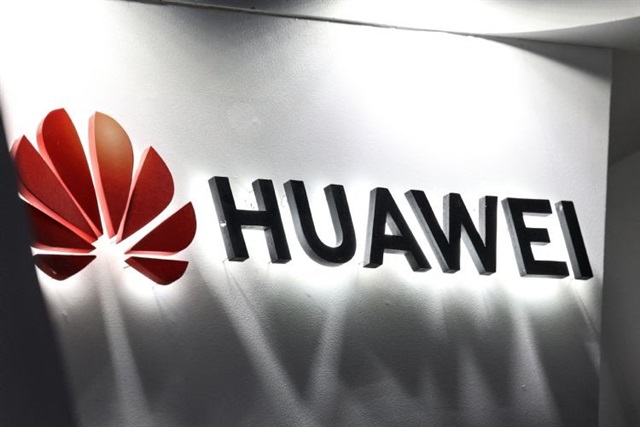
Huawei's AI leadership is facing renewed turnover. Wang Yunhe, director of Huawei Noah's Ark Lab and a key architect behind PanguLM, has left the company after nearly nine years.
The departure highlights ongoing churn among senior talent in the large language model (LLM) sector and refocuses attention on earlier technical controversies linked to Huawei's AI development.
According to 36Kr and Sina, Wang, born in 1991, graduated from Peking University's Department of Intelligent Science and has specialized in deep learning, model compression, and computer vision. He joined Huawei's Noah's Ark Lab as an intern in 2017 and rose to senior engineer and technical expert before being appointed lab director and head of PanguLM in 2025, placing him at the center of Huawei's AI R&D efforts.
His exit revives scrutiny of the 2025 "model replication" controversy. AI researchers at the time pointed to similarities in parameter distribution between Huawei's open-source Pangu Pro MoE model and Alibaba's Tongyi Qianwen, raising questions about model development practices.

Huawei Noah's Ark Lab director, Wang Yunhe, has resigned. Credit: News.youth.cn
Huawei rejected the claims, stating that PanguLM was independently trained on its Ascend platform and complied with open-source licensing rules. Subsequent anonymous internal posts, however, alleged continued training on competing models and raised concerns over R&D management, adding pressure to the project's reputation.
Chinese tech outlet QbitAI reported that Wang has moved into the AI agent space, founding a startup and seeking funding. The shift aligns with growing industry focus on AI agents as a commercialization pathway for large models and reflects a broader migration of senior AI talent from large technology companies to startups.
Wang's departure raises questions over the pace of PanguLM's technical roadmap and commercialization. More broadly, the accelerating mobility of post-1990 AI researchers points to a rapid reshaping of China's AI talent landscape.
Article translated by Levi Li and edited by Jack Wu