As China–US technological and industrial rivalry intensifies, Beijing is strengthening its trade defence measures. China's Ministry of Commerce announced on the 13th that anti-dumping duties on imported solar-grade polysilicon from the US and South Korea will be extended for another five years from January 14, 2026.
China has imposed anti-dumping tariffs on solar-grade polysilicon from the US and South Korea for more than a decade, but the latest extension is widely viewed as a retaliatory response to closer US-South Korea alignment in strategic industries.
According to the Ministry of Commerce's 2026 Announcement No. 3 issued on the 13th, US suppliers will generally face anti-dumping duties above 50%. REC Solar Grade Silicon and REC Advanced Silicon Materials will each be subject to a 57% tariff, as will AE Polysilicon. Hemlock Semiconductor will face a 53.3% rate, MEMC Pasadena 53.6%, while other US companies will be charged 57%.
South Korean suppliers will face wider tariff disparities. OCI will be subject to a 4.4% rate, Hankook Silicon 9.5%, and Hanwha Solutions 8.9%. SMP will face an 88.7% tariff, while Woongjin Polysilicon, KCC, Korean Advanced Materials (KAM), and Innovation Silicon will each be charged 113.8%. Other South Korean companies will face an 88.7% rate.
China has previously taken countermeasures against deeper US–South Korea cooperation in semiconductors, shipbuilding, and advanced manufacturing. On October 14, 2025, the Ministry of Commerce announced sanctions on five US-linked subsidiaries of Hanwha Ocean, citing retaliation for Washington's Section 301 investigations into China's maritime, logistics, and shipbuilding sectors.
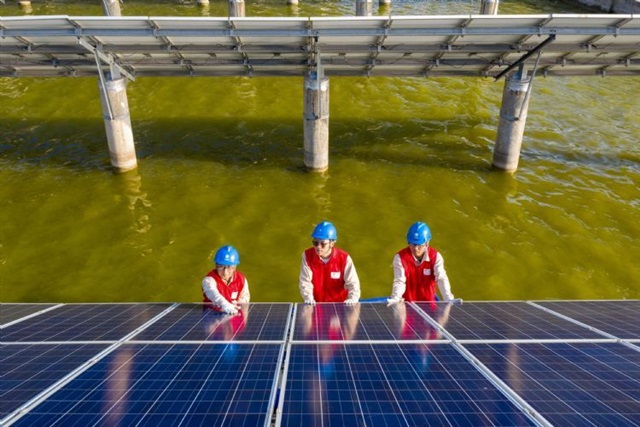
As geopolitical risks rise, solar-grade polysilicon remains a core material for crystalline silicon solar cells. China is using trade tools such as anti-dumping measures to defend domestic industries and respond to policy pressure. Whether these actions will extend to other strategic sectors remains to be seen.
Article edited by Jack Wu