
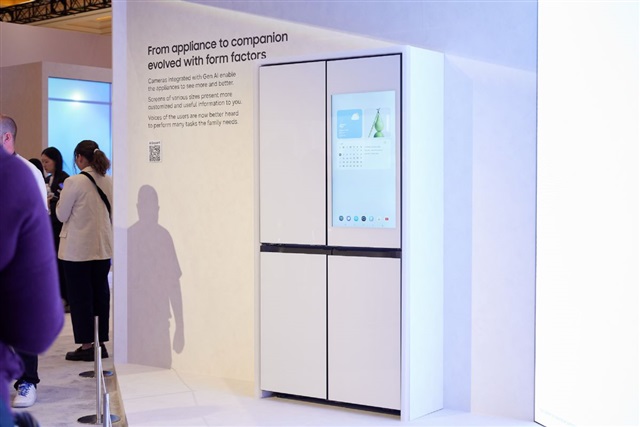
Samsung Electronics set up a dedicated 1,400-ping exhibition hall for CES 2026 to present a more comprehensive vision of its smart home ecosystem. For 2026, Samsung's core strategy centers on the concept of the "AI companion at home," spanning three key scenarios: entertainment, home living, and health.
In entertainment, beyond showcasing display technologies and new product lines, Samsung highlighted the role of the TV as the central hub of the smart home. Rather than serving solely as a viewing device, the TV is positioned as the control center for connected household services.
This shift is driven by Samsung's Vision AI Companion (VAC) technology, which enhances the viewing experience through AI. The system enables Smart TVs to understand on-screen content in real time and provide contextual information and scenario-based recommendations, such as live sports data, recipe searches, fitness suggestions, and synchronized control of kitchen appliances for cross-scenario interaction.
Samsung's vision for future home living moves from reducing household chores toward eliminating them. Through the SmartThings platform and an open ecosystem strategy, AI enables cross-device collaboration, allowing refrigerators, displays, and appliances to predict needs and execute tasks automatically with minimal user input.
The transition from appliances as tools to companions is supported by SmartThings' global user base of over 430 million, forming the foundation of Samsung's AI ecosystem.
Samsung's three flagship AI appliances, including the Bespoke AI Refrigerator, are part of the Family Hub ecosystem. Its upgraded AI Vision system, powered by Google Gemini, tracks food inventory and recommends recipes through the gamified "What's for Today" feature, while synchronizing cooking steps with ovens and rice cookers for automated meal preparation.
Samsung also disclosed a partnership with insurance firm Hartford Steam Boiler to integrate smart appliances into SmartThings for home safety monitoring. After a pilot launch in the US in 2025, the service is planned for expansion to more regions.
For laundry and cleaning, Samsung introduced the Bespoke AI Laundry system and the Bespoke AI Jet Bot Combo robot vacuum-mop, powered by Qualcomm processors. These devices use camera recognition to identify different liquid stains and can function as home monitoring systems with a screen and voice interaction.
In health applications, Samsung connects fitness and sleep data from wearable devices with food inventory data from the Family Hub refrigerator to provide personalized dietary recommendations and issue alerts when abnormal health indicators are detected.
Technologically, Samsung maintains in-house capabilities across AI chips, display technologies, and operating systems. The AI Chip Engine Pro in Micro RGB TVs enables precise RGB color control, while the SmartThings platform's 430 million users provide continuous data for refining AI algorithms and accelerating product iteration to better match real-world needs.
Article translated by Levi Li and edited by Joseph Tsai