India's semiconductor ambitions are beginning to extend beyond fabrication and conventional packaging into secure chip personalization and cryptographic control, as Kaynes Semicon and SEALSQ detailed the roadmap for their newly approved joint venture (JV).
The JV, to be incorporated as an Indian entity, aims to establish what the companies describe as a sovereign post-quantum semiconductor personalization center using Kaynes Semicon's existing OSAT infrastructure in Gujarat. Total investment in the venture will be close to US$20 million, with around US$8 million allocated to capex for secure equipment, tooling, and infrastructure.
SEALSQ will contribute secure semiconductor IP, cryptographic root-of-trust technology, and key-management capabilities. Kaynes Semicon will execute backend manufacturing, testing, and onshore secure provisioning.
The partnership signals a strategic shift in India's semiconductor playbook, moving focus from manufacturing capacity alone to control over secure chip personalization, a stage increasingly viewed as a chokepoint in the global semiconductor value chain as governments and industries prepare for post-quantum security mandates.
While fabs and OSAT plants define where chips are made, cryptographic key injection and certificate provisioning determine who ultimately controls devices deployed in critical infrastructure.
Carlos Moreira, founder and CEO of SEALSQ, said the project is "more significant than a capacity-driven OSAT expansion," arguing that control over cryptographic key injection and personalization will be decisive as post-quantum security requirements move from roadmap to regulation.
Certification by Q2, production expected in H2 2026
The Indian facility is expected to become certification-ready by the second quarter, following installation of secure equipment and completion of audit and compliance processes.
Raghu Panicker, CEO of Kaynes Semicon, said they expect production to reach commercial contribution by the second half of 2026.
"This is a phased build," Panicker said. "Certification and qualification come first, and only then do we scale."
Shipment volumes were not disclosed, but executives indicated the ramp would move from qualification lots to production as regulatory approvals and customer onboarding progress.
The urgency stems partly from quantum computing advances. SEALSQ executives said recent visits to Indian quantum computing startups highlighted the pace of domestic research, though they emphasized that the immediate driver for deployment is regulatory preparedness rather than raw qubit counts.
Smart meters identified as the first deployment vertical
The smart meter segment has been identified as the first deployment vertical for the JV, reflecting both regulatory pressure and the scale of India's nationwide smart metering rollout.
Moreira said post-quantum cryptography is becoming increasingly relevant for smart meters due to their long operational lifecycles and exposure to so-called "harvest now, decrypt later" attacks, where encrypted data collected today could be decrypted in the future using more powerful computers.
Government-linked and utility-driven deployments are expected to anchor early demand, with other critical infrastructure segments, including cloud platforms, government databases, satellites, and space systems, expected to follow.
Clear split between IP and execution
Under the JV structure, SEALSQ will supply secure semiconductor IP, cryptographic assets, and trust architecture, while Kaynes Semicon will handle assembly, testing, final test, and secure key injection, supported by hardware security modules installed on-site.
"We bring the IP, the root of trust, and the cryptographic assets, while Kaynes Semicon handles the operational execution," Moreira said.
Secure provisioning and certificate enablement are the most sensitive elements of the value chain, he added, requiring tighter controls than standard OSAT operations. Control over cryptographic keys ultimately determines control over devices deployed in critical systems.
IP ownership aligned with sovereignty goals
IP ownership has been structured to support India's sovereignty objectives, the companies said.
According to Moreira, the new IP developed by the JV will be owned by the JV entity, while the existing SEALSQ IP is licensed into the venture. Customer-specific designs may follow contract-dependent ownership models, but cryptographic root keys and other critical trust assets will be generated and controlled within India.
"That capability to create and retain a sovereign chip platform is what differentiates this from conventional backend manufacturing," Moreira said.
Over time, the JV expects to build reusable secure platforms rather than operating solely as a bespoke services provider.
Phased localization prioritizes personalization over fabs
SEALSQ outlined a phased localization strategy, starting with onshore secure personalization rather than immediate domestic wafer production.
"Step one is personalization and key injection in India," Moreira said. "That's where sovereignty really starts, because the keys are Indian keys."
In the initial phase, finished chips will be imported and personalized locally, including wafer testing, key injection, and certificate provisioning at Kaynes Semicon's facility. Subsequent phases could involve local chip design and, eventually, domestic wafer manufacturing, potentially aligned with India's planned 28nm fabrication capacity.
Moreira said that globally, secure personalization is often prioritized ahead of fab localization, as control over cryptographic assets delivers immediate strategic value.
Differentiation from other Indian OSAT projects
Panicker said the JV is not competing directly with other Indian OSAT projects, arguing that post-quantum security needs to be embedded at the hardware level rather than added later as a software layer.
He said the JV is focused on security-critical backend capabilities tied to national infrastructure, rather than high-volume consumer OSAT work.
Moreira stressed this point, adding that traditional semiconductor companies lack the cryptographic expertise required for secure personalization.
"Software alone can never fully protect the device," he said. "The identity of the object has to be anchored in secure hardware, in what we call an HSM-type environment secured by post-quantum algorithms."
He noted that even established cybersecurity companies like RSA, VeriSign, and Symantec "didn't scale up" to address quantum threats at the silicon level, while conventional semiconductor manufacturers "will not even know how to answer the question" if asked for post-quantum chips.
Moreira also pointed to the limited global supply base for secure personalization capability, noting that even US passport programs rely on European-supplied secure chips, underscoring the limited global supply base for proven secure personalization capability.
Hybrid revenue model and execution focus
The business model combines one-time hardware revenue with recurring income from security services, including certificate management, software updates, and lifecycle monitoring, according to the companies.
Both executives said certification timelines, customer qualification, and policy adoption are the main near-term execution variables, while longer-term demand is expected to be shaped by global post-quantum cryptography mandates and export requirements.
In the near term, the JV plans to incorporate the company, install secure semiconductor processing equipment using Kaynes Semicon's existing facilities, and pursue pilot projects starting with smart meters and government-linked infrastructure.
Editor's note:
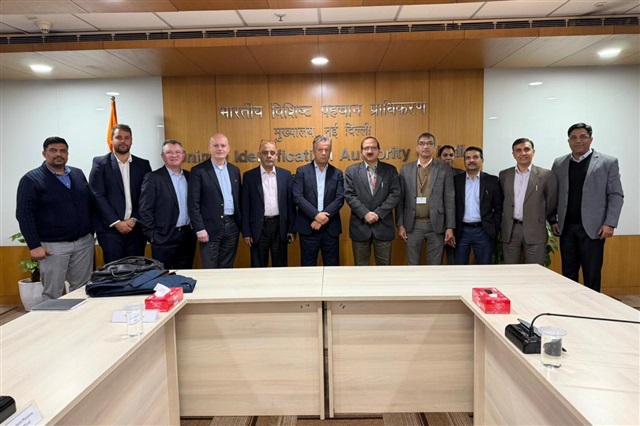
This interview was conducted in India during SEALSQ's January 2026 strategic roadshow, which included meetings with government agencies, quantum startups, and industrial partners.
Article edited by Jack Wu