
China smartphone market and industry, 3Q 2026
According to DIGITIMES observations and analysis, smartphone memory contract prices in the first half of 2026 often rose 50% to 80% quarter-over-quarter.
Explore focused reports on emerging technology infrastructure, regional market shifts, sustainability strategies, and specialized applications shaping the global technology supply chain.
Please enter at least 2 characters.
According to DIGITIMES observations and analysis, smartphone memory contract prices in the first half of 2026 often rose 50% to 80% quarter-over-quarter.

DIGITIMES notes that China continued to advance smart glasses policies from the central government to local governments in 2026, driving both enterprise production and consumer purchase subsidies.

Although the global 5G mobile communications market is still growing in 2025, higher 5G user penetration has not necessarily translated into equivalent revenue growth for telecom operators, while annual growth in mobile data traffic has continued to slow.
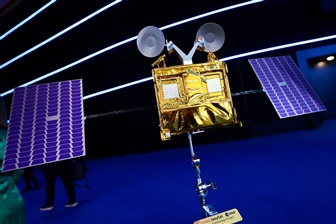
DIGITIMES has observed that since SpaceX began using reusable rockets for launch missions, its payload capacity has continued to rise.

AI glasses are emerging as a key gateway to AI; the market is projected to grow rapidly between 2026 and 2030, with a compound annual growth rate of 48%, creating new opportunities across the supply chain.

Megawatt AI Racks: Infrastructure Evolution & Wide-Bandgap Power Semiconductor Opportunities by 2030

Competing Paths in Data Center Optics: XPO Could Beat CPO to Mass Production in 2027
Mastering the 140%+ CAGR of CPO Semiconductor Revenue Explosion

The CPO market is projected to grow sharply by a 142% CAGR from 2026 to 2030 (excl. ELS) and as AI clusters scale and 3.2T data rates push copper to its limits, CPO is emerging as the new star.
NVIDIA and Broadcom both started deploying CPO in switch products, signaling the tech's opportunity in early commercialization.

According to DIGITIMES, six major AI applications - chatbots, software development, image generation, video generation, enterprise operations automation, and manufacturing process automation - are increasingly being adopted by enterprises. The resulting surge in inference demand, combined with diverse deployment models across cloud, edge, and on-premises environments, is driving a significant “specification reset” in AI infrastructure.