Sharp's June 9 fiscal year 2026 business briefing highlighted a deeper partnership with Foxconn, with AI servers becoming the main focus. Sharp said it will begin selling AI servers in fiscal 2027, signaling a shift in both its business model and its role in Japan's AI infrastructure market.
After 10 years of adjustment, the relationship between Sharp and Foxconn is moving from manufacturer support to a closer strategic partnership built around AI. The two companies are positioning the collaboration as part of a wider restructuring across the electronics manufacturing industry under the AI wave.
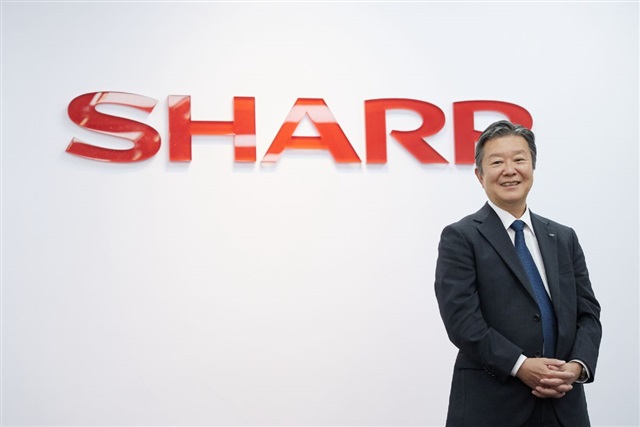
Under Chairman Young Liu, Foxconn has expanded beyond smartphone contract manufacturing into AI servers, semiconductors, and next-generation communications, while pursuing a long-term goal of becoming a global integrated company driven by AI. Sharp President Tetsuji Kawamura has said he wants to use Foxconn's transformation to reshape Sharp as well. The two sides are now starting with AI servers and moving toward an industry ecosystem model.
The briefing showed how that division of labor is taking shape. Foxconn will handle front-end manufacturing and supply chains, leveraging its large-scale AI server production and industry ties. Sharp will focus on branding, sales, and service, selling in Japan under its own brand or as an agent.
This model allows Sharp to avoid building a manufacturing system from scratch while tapping Foxconn's AI server supply chain. Foxconn's products would also gain access to Sharp's local channels and 108 service locations across Japan. The arrangement is designed to give both sides complementary advantages.
Sakai plant becomes a core asset
Beyond hardware, Sharp is making the Sakai Plant, or SDP, a central part of its AI strategy and asset-light approach. Sharp has stopped large-panel production at the site and is repurposing its land and power infrastructure into what it describes as Asia's largest AI data center.
The company wants to combine AI server hardware, data-center computing capacity, software services, and industry solutions into a broader AI ecosystem. Sharp is aiming to move from a traditional home appliance and panel maker into an AI technology solutions provider.
Kawamura has said Japan's AI computing demand is shifting from model training to inference applications, and that demand for medium- and small-scale compute is the real battleground in the Japanese market. Large hyperscale cloud projects are not Sharp's main target.
Instead, Sharp is focusing on demand that extends from large language models into inference and is closer to end customers. That includes logistics, healthcare, offices, and business demand linked to manufacturing automation upgrades in Japan.
Article translated by Jingyue Hsiao and edited by Joseph Tsai