
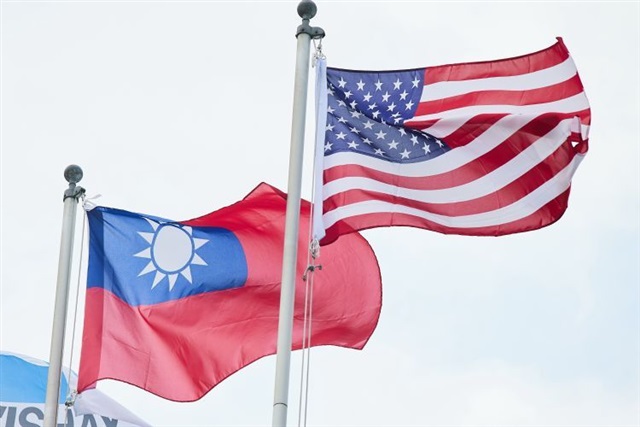
Taiwan and the US finalized the Agreement on Reciprocal Trade (ART) on February 13, establishing a mutual 15% tariff rate and commitments on food security and defense resilience, while business groups urged immediate parliamentary action to prevent possible US reassessment.
Both governments agreed on the ART setting a single 15% tariff without stacking additional levies and securing most-favored-nation treatment regarding Section 232 tariffs, according to statements released on February 13. The Executive Yuan said it will submit the ART alongside the Taiwan-US Investment Memorandum of Understanding, signed in January 2026, to the Legislative Yuan for approval and is seeking parliamentary ratification.
A coalition of major Taiwanese industry associations issued a joint statement the same day, calling on the Legislative Yuan to accelerate deliberations once the Executive Yuan's proposal is received. The signatories included the Chinese National Federation of Industries, Chinese National Association of Industry and Commerce, National Association of Small and Medium Enterprises, Taiwan Federation of Industries, Federation of Association of Industry Zone Vendors, Taiwan Electrical and Electronic Manufacturers' Association, and Taiwan Chamber of Commerce and Industry.
The industry groups said the agreement achieves tariff parity with Japan and South Korea and lowers reciprocal tariffs to 15% amid complex geopolitical conditions. They warned that delays in the Legislative Yuan's review could give the US grounds to reopen tariff rate assessments or initiate currency investigations, actions the groups said would risk the stability of the preferential 15% tariff rate that they view as important to Taiwan's global industrial competitiveness.
The statement also raised sector-specific concerns about opening Taiwan's market to US-made automobiles and agricultural products and about competitive pressure from third countries that might redirect exports to Taiwan because of higher tariffs elsewhere. The coalitions urged the government to continue providing relief measures, strengthen industrial guidance, and incorporate industry feedback to assist enterprises in managing the transition and maintaining resilience during global economic restructuring.
Officials from the Executive Yuan and the business groups did not provide a timeline for the Legislative Yuan's review. Lawmakers and trade policy analysts are expected to debate the ART and the Investment MOU during the parliamentary deliberation process.
Article translated by Jingyue Hsiao and edited by Jack Wu