
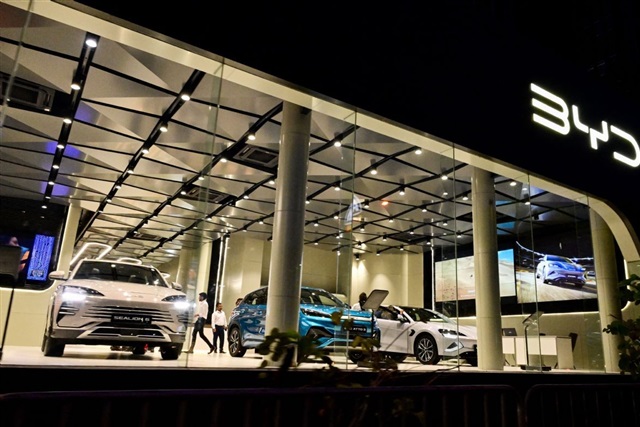
BYD plans to intensify its push into the German market in 2026 by expanding its dealer network and implementing steep price cuts to target more than 50,000 annual vehicle sales and overtake SAIC MG as the leading Chinese automotive brand in Europe.
Industry sources say Europe — with Germany at its core — is among the most discerning automotive markets, and success there would raise BYD's global visibility. According to international media reports, Piotr Bialkowski, BYD's head of brand operations in Germany, said the company aims to grow its dealer network to more than 350 locations by the end of 2026 to increase channel density and reach rural areas traditionally served by mainstream brands.
On product and pricing strategy, BYD is focusing on the Atto 2 plug-in hybrid as a flagship model and using aggressive discounts. Combining annual brand promotions with government subsidies, the Atto 2's price would fall from about EUR39,000 (US$46,390) to roughly EUR23,000 (US$27,360), a reduction of about 41%; the Tang SUV is reported to receive similar discounts. BYD frames the approach as a willingness to accept short-term profit reductions to gain market share and alter pricing dynamics in Europe's mid-size SUV segment.
Sales figures for 2025 show BYD registered roughly 23,000 vehicles in Germany, compared with about 26,000 units for MG. The company's 2026 target of over 50,000 sales aims to achieve rapid growth and surpass MG in the European market. Observers note uncertainties in sales composition: private buyers accounted for only 12.4% of BYD's German sales in 2025, with the remainder driven by corporate leasing, rental companies, and self-registrations.
Local dealers have expressed concerns that deep discounting could compress margins, affect brand perception, and pressure used-car prices. BYD's 2026 plans also include steps to establish production capacity in Europe and to compete more directly with established German automakers such as Volkswagen Group, BMW, and Mercedes-Benz.
Separately, BYD has become the first Chinese company to sue the US government over tariffs, seeking refunds of duties paid since April 2025. The company's US operations include buses, commercial vehicles, power batteries, energy storage systems, and solar modules.
Article edited by Jack Wu