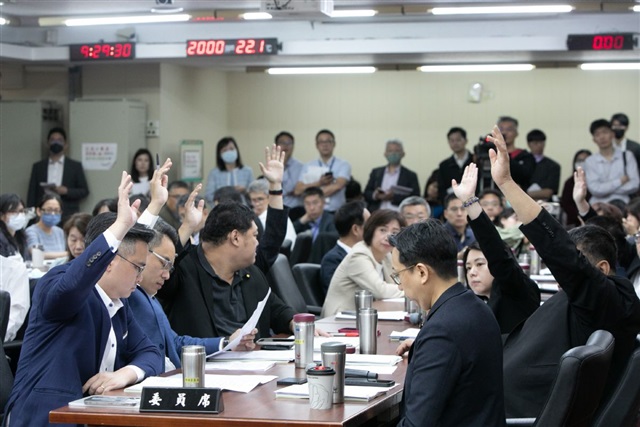
The Legislative Yuan has passed the AI Basic Act in its third reading, designating the National Science and Technology Council (NSTC) as the competent authority (CA). However, questions remain over how the executive branch will interpret and implement this law, how the NSTC will shoulder the heavy responsibilities of AI governance, and whether the relevant subordinate regulations should be managed by the Ministry of Digital Affairs (MODA) or the NSTC.
The AI Basic Act has faced persistent controversy. After coordination by the Executive Yuan, the draft initially proposed was changed from the NSTC to the MODA. Legislators submitted as many as 14 alternative versions. There was controversy regarding whether government organizational structures would become overlapping and inefficient; whether the Act would blur its role versus substantive implementing laws; whether early designation of a competent authority would limit policy flexibility, the lack of regulatory impact assessments; and whether it was appropriate for the AI Basic Act to impose penalties on AI developers or users.
During committee discussions, the MODA and NSTC both expressed that certain provisions were inadvisable. Yet opposition legislators retained controversial clauses for plenary session negotiation, and the clauses were ultimately protected by the opposition majority in the legislature.
The NSTC is designated as the CA, while the MODA is tasked with promoting an internationally aligned AI risk management framework, focusing on four key areas: establishing basic awareness, identifying risks, assessing risks, and responding to risks. However, this legal structure may generate further complications in defining agency responsibilities and obligations in practice.
The AI Basic Act also mandates the Executive Yuan to establish a National AI Strategy Special Committee, convened by the Premier and composed of experts, heads of relevant agencies, industry representatives, and local government leaders. The committee is required to formulate a national AI development blueprint, meet at least once annually, and convene emergency meetings when urgent or major events occur, with the NSTC assisting in staff work.
Critics note that this arrangement risks duplicating existing Executive Yuan-level coordination tasks for digital policy and legal frameworks, raising concerns about overlapping responsibilities and bureaucratic inefficiency.
Article edited by Jack Wu