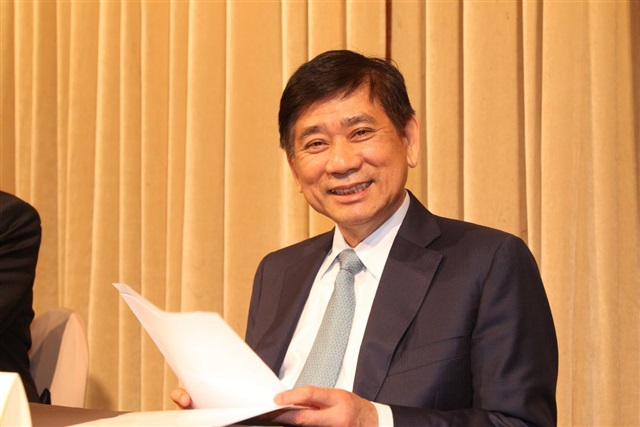
Driven by growing demand for AI servers, Catcher Technology has joined the competitive server chassis components arena. Chairman Hung Shui-shu said the server segment is still in its early stages, gaining traction only in recent months with entirely new customers. If the company successfully penetrates this market, Hung expects it to contribute significantly to future revenue. Production will leverage Catcher's Taiwan and Suqian, China plants, though Hung did not specify which segment of the server chassis business the company is targeting.
Investments and growth opportunities in non-PC segments
Catcher is investing in new equipment to support larger server chassis components, while confidentiality agreements limit disclosure of client details. Hung expressed optimism about winning more AI server orders, noting that "any type of server chassis component has potential." The company has also entered the drone supply chain, securing major orders for both metal and non-metal structural parts, highlighting aerospace as a key non-PC growth area. Non-PC business accounted for roughly 20% of revenue in 2025, with a target of 30% in 2026, driven in part by servers, drones, medical devices, and semiconductor sectors.
Financial performance and market outlook
Notebook and tablet casings remain Catcher's core business, representing about 80% of revenue. Weak notebook shipments led to Q3 revenue of NT$4.861 billion (approx. US$157 million), down 4.4% quarter-over-quarter and 5.0% year-over-year, mainly due to front-loaded inventory in supply chains. Hung cited US tariffs, currency fluctuations, and cost pressures as ongoing challenges impacting operations.
Despite uncertainties, cumulative revenue for the first three quarters reached NT$14.296 billion, up 6.3% year-over-year, with gross profit of NT$4.464 billion and a margin of 31.2%. Net income after tax declined 49.5% to NT$4.769 billion. Looking ahead to 2026, Hung remains optimistic, anticipating a return-to-growth year supported by AI server, aerospace, and healthcare business expansion.
Article translated by Jingyue Hsiao and edited by Jack Wu