

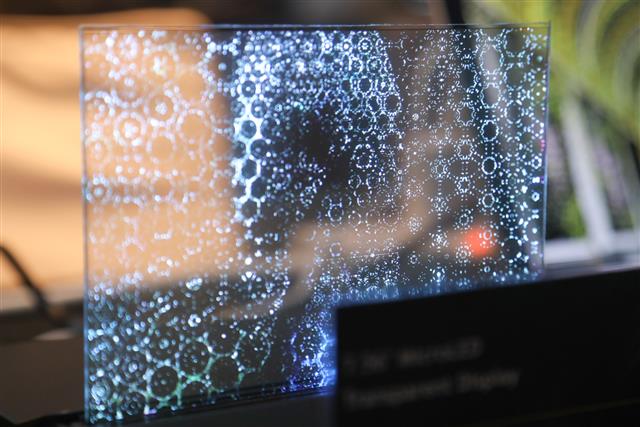
PlayNitride has set a goal of reducing production cost for microLED panels by 95% during 2020-2025 and has so far decreased the production cost for microLED chips by 60% and that for microLED modules by 50%, with the progress in cost reduction being ahead of the schedule, according to company chairman and CEO Charles Li.
However, realization of cost reduction by 95% needs participation by other supply chain makers of materials, equipment and products, Li said.
PlayNitride has reached a yield rate of 99.5% in epitaxy of microLED wafers and a usage rate of 80% for microLED epitaxial wafer, Li noted. The higher the usage rate, the more microLED chips are mass-transferred from wafers onto backplanes, and PlayNitride aims to hike the usage rate to 90%, Li indicated.
If production cost for miniLED panels can be reduced by 95% in 2025 as PlayNitride plans, a microLED TV can be priced at US$5,000-10,000 in 2025, comparable to retail prices for an OLED TV at present, and 1.0-1.5 millionmicro LED TVs could be sold globally in the year, Li said.
PlayNitride has been in talks with several vendors about applying microLED technology to AR/VR devices, Li noted, adding that microLED technology is likely to be adopted for metaverse applications in 2-3 years.
PlayNitride has developed a panchromatic microLED display with 1,411PPI for use in AR devices and plans to begin design-in process or even develop prototype products in 2022, according to industry sources.
LED and miniLED wafer and chip maker Eipstar, a shareholder of PlayNitride, is in preparation to set up production capacity for microLED chips and hopes to kick off the production the earliest in 2023, company chairman Patrick Fan said.
Electronic and Optoelectronic System Research Laboratories (EOSRL) under government-sponsored Industrial Technology Research Institute is doing R&D of applying microLED technology to AR/VR devices, according to EOSRL general director Wu Chih-yi. EOSRL has developed a microLED panchromatic miniaturized display module through mass transferred blue-light microLED chips plus quantum dots onto CMOS backplanes.
Article translated by Adam Hwang