
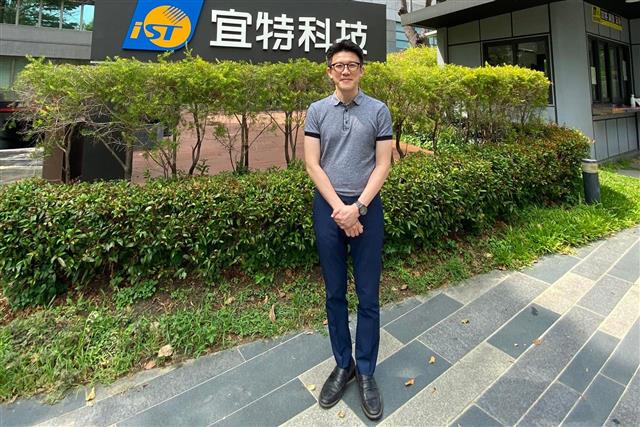
Integrated Service Technology (iST), a Taiwan-based provider of semiconductor verification services, expects demand from the components sector supporting new energy cars to significantly increase in 2021, according to company vice president Allan Tseng.
Many new international, industry or country-specific technical standards concerning new energy cars are expected to take effect in 2021 and this will generate additional demand for verification services for car components and modules, Tseng said.
For new energy cars or future cars - or strictly speaking, electric vehicles (EVs) - three interest groups are taking shape: EV startups of which Tesla is the leader; US, European and Japanese traditional automakers; and China-based EV vendors with government backing, Tseng said. From a mid- and long-term point of view, the global EV market is unlikely to be large enough to let so many vendors survive, Tseng noted.
For verification labs including iST, technical items to be tested and analyzed for automotive components are much more than those for consumer electronics, Tseng said.
Automakers and their tier-1 supply chain makers demand that failure rates for car components and modules be decreased to 1 part per billion, and they promote "zero defect" concept among the corresponding supply chains, Tseng noted.
iST undertakes verification for automotive electronic components, while Dekra iST, a joint venture established by iST and Germany-based Dekra, is responsible for reliability analysis for automotive electronic modules as well as car-use PCBs and LED devices, Tseng noted. Currently, 70-80% of iST's clients for automotive component are IC design houses.
Article translated by Adam Hwang
