
China's current wave of enthusiasm for the Internet of Things (IoT) had already begun by the time IoT was incorporated into the 12th Five Year Plan in June 2010. Immediately afterward, the central government and local governments across the country began working on a range of standards, industry chains and applications with the goal of creating an industry worth more than CNY500 billion over the coming decade. During the initial phase of development, the application of IoT will focus on the smart power grid, smart transport, smart logistics and precision agriculture sectors.
While plans for the IoT industry and IoT applications are being published by all levels of government in China, the majority of such efforts will remain demonstration or "model" schemes until at least the end of 2011, and are not predicted to deliver real results for another one to two years. However, China will soon have a considerable presence in terms of TD-LTE wireless communications standards, supporting devices, application standards and solutions. In the long term, these foundations will help to foster the growth of more upstream homegrown companies and industry chains as a whole.
Chart 1: MIIT's development directions and application sectors for the 12th FYP period
Table 1: Public construction and industrial parks involving IoT in 9 major cities
Chart 3: Major local manufacturers in China's IoT supply Chain
Long-range network and communications technologies: Wi-Fi and 3G/4G
Chart 4: Operational schematic for the IoT system proposed by IBM
Chart 5: Focus of the 3 major China-based equipment suppliers' IoT activities
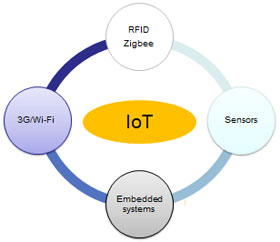
Chart 6: China's IoT system architecture and associated technologies
Table 2: China's 2D barcode standards in comparison with international standards
Table 3: Comparison of the 3 main international standards for RFID
Chart 7: Milestones in the Chinese government's promotion of standards for RFID technology
Chart 8: Overview of ZigBee network and application layer standards
Related industries and application plans in key cities and provinces
Chart 9: Topology of Wuxi's IoT-based sensor system for museums
Table 5: Suzhou began construction on a second batch of 8 IoT projects in 2011
Chart 10: Investment in Guangdong's 9 major IoT infrastructure construction projects
Chart 13: Chongqing's 8 major IoT demonstration application sectors
Table 6: Fujian's Pingtan Smart Island IoT application project
Three major telecoms carriers' IoT development plans and progress
Chart 14: Overall IoT strategies and presence for China's big three telecoms carriers
Table 7: Development of IoT technologies in 2011 for China's 3 main telecoms carriers
Table 8: Three major telecoms carriers' mobile payment services
