

Unimicron, a major Taiwanese IC substrate maker, came under intense supply chain scrutiny last week after reports that prosecutors and investigators searched the company over a suspected "origin washing" case. The move has put long-standing cross-border production arrangements in Taiwan's electronics sector under sharper review.
On August 28, Unimicron said in a regulatory filing that the Taoyuan District Prosecutors Office had directed the city's investigation bureau to search the company on suspicion of violating laws related to obstruction of industry and commerce.
The company said operations remain normal and that the case has had no material impact on its finances or business. It added that it will fully cooperate with investigators to clarify the facts, while denying rumors of internal falsified accounts and insider trading.
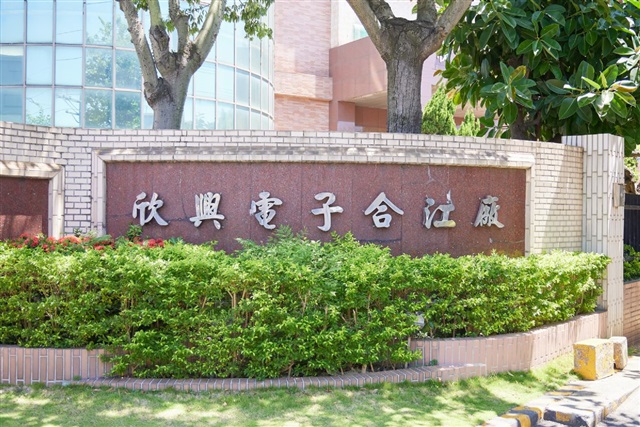
Unimicron said its plant in Zhongli, Taoyuan, searched by investigators mainly produces high-density interconnect (HDI) and printed circuit board (PCB) products and is not involved in its core IC substrate business.
Industry sources said the case's "origin washing" controversy stems from Unimicron's flexible production allocation between its Taiwan and China plants. For orders from customers that do not clearly require non-China origins, the company reportedly uses a Taiwan-order, China-manufacture model before shipping goods back to Taiwan as bare boards or semi-finished products for final processing or surface-mount technology (SMT) assembly.
That arrangement has raised concerns over origin labeling. Unimicron's HDI and PCB capacity in Taiwan is concentrated in three plants in Taoyuan District, while its China capacity is located in two facilities. The company also has HDI and PCB capacity in Thailand, Japan, and Germany.
According to investor presentation materials, Unimicron's HDI and PCB utilization in the second quarter of 2026 was about 85% to 90%, and the two product lines together accounted for 36% of revenue.
Compared with the same period in 2025, HDI and PCB revenue rose 29% and 14%, respectively, driven by strong demand for AI servers and optical transceiver module applications. Those businesses have become a key growth engine outside its IC substrate operations.
The legal standard: 'substantial transformation'
Industry analysts said the kind of cross-border supply chain division used in Unimicron has long been common in Taiwan's electronics industry. But whether it constitutes "origin washing" depends on the legal standard of "substantial transformation". Otherwise, the product may be deemed to have false origin labeling.
Two conditions can be used to assess the substantial transformation test. One is the first six digits of the customs tariff code, which differs between raw materials and processed or manufactured goods. The other is that when the first six digits do not change after processing, whether the value-added ratio before export exceeds 35%, or the product meets a key manufacturing process published by the International Trade Administration.
For PCB products, if a bare board imported from China is assembled in Taiwan through SMT into a printed circuit board assembly (PCBA) with a specific function, and the first six digits of the tariff code change, it can be directly recognized as substantial transformation under the first condition and legally labeled "Made in Taiwan."
However, if a PCB or HDI semi-finished product is imported from China and then undergoes lamination, drilling, or surface treatment in Taiwan, while the first six digits of the tariff code remain unchanged upon export, authorities must examine whether local processing added enough material cost, labor hours, technology, equipment depreciation, and profit to push the value-added ratio above 35%.
Whether Unimicron's cross-border capacity allocation crossed the legal line on origin compliance remains to be determined by the judiciary and investigators.
The broader trade context
The Taoyuan prosecutors' office said Unimicron allegedly shipped PCB products manufactured in China back to Taiwan and then relabeled their origin as made in Taiwan, leading to suspicions of false origin markings and offenses under criminal forgery and obstruction of other laws.
After searching two of the Taoyuan plants, investigators took in 14 defendants, including the general manager of the PCB business unit, a vice president, sales staff, a plant manager, and the manufacturing department manager. They also questioned 4 witnesses and seized evidence. After questioning, the 5 main suspects were released on bail, while the other defendants were sent home.
The White House also recently released a report on August 13 titled "The Great Transshipment Scam." The report accused China of using Taiwan and more than 40 other countries to relabel exports and evade the high tariffs and trade restrictions imposed by the US, adding to the scrutiny surrounding Unimicron's case in Taiwan's electronics industry.
Article translated by Lily Hess and edited by Jack Wu