

India's semiconductor expansion is beginning to expose a shortage of engineers with experience in production testing, a capability that will become increasingly important as new OSAT plants and fabs move toward manufacturing, executives at Emerson's NI test and measurement business said.
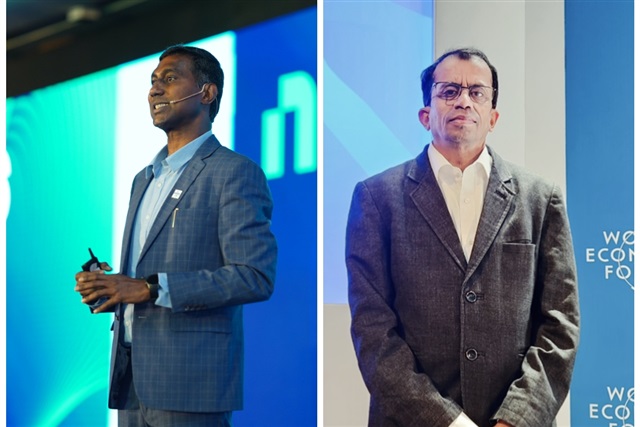
The country has spent decades building engineering capabilities around semiconductor design and validation. That, however, does not automatically provide the skills needed to operate high-volume production-test environments, Baskar Ceri, Managing Director, NI India, Emerson, told DIGITIMES.
Ceri expects demand for semiconductor production-test systems in India to rise more sharply over the next three to five years as the first outsourced semiconductor assembly and test projects scale and additional manufacturing capacity develops.
"In semiconductors, we see probably a three-to-five-year window," Ceri said. NI already has a presence in design and validation in India, while the larger production opportunity will take longer to emerge.
Global semiconductor companies have built substantial engineering operations in the country, making India an important location for chip design and validation. Production testing, by contrast, requires manufacturing experience that the domestic ecosystem is only beginning to develop.
NI is already working with Kaynes Technology as an early OSAT customer and is engaged with other companies entering the sector, Ceri said. He described the current semiconductor investment cycle as showing more traction than previous attempts to establish manufacturing in India.
"This is the third time, and we are seeing some real traction this time," Ceri said.
He pointed to China and Taiwan as markets where NI already benefits from large semiconductor production volumes. Strong demand for AI systems has increased production activity there, creating opportunities for test-system suppliers.
India remains at an earlier stage, but its developing packaging and manufacturing operations could gradually broaden NI's local semiconductor business beyond design and validation.
Manufacturing creates different talent requirements
A move into production is also changing the type of semiconductor expertise India requires.
Srinivasa Prasad, India R&D Site Head & Sr Director, NI India, Emerson, said India's engineering base developed first around software before expanding into embedded systems and chip design as international semiconductor companies built large operations in the country.
Much of the associated testing expertise has therefore been tied to design verification and pre-silicon development rather than high-volume manufacturing.
The requirements change as chips move into production.
"You need to kind of change that to yield engineering, DFT specialist, DFM specialist," Prasad said, adding that system-level testing is another area where capability needs to develop.
India is building those skills later than semiconductor manufacturing hubs that have accumulated production expertise over decades. Although universities and government-backed programs are beginning to address the issue, developing experienced manufacturing engineers will take time, Prasad said.
Ceri said the gap is not limited to highly specialized semiconductor roles. NI also sees shortages in broader electronics engineering and among engineers capable of designing and operating production-test environments.
"Test engineering is not just coding," Ceri said, estimating that coding accounts for around 15% to 20% of the overall test-engineering workflow.
The rest encompasses work extending from test planning and system design to interaction with hardware, debugging and analysis of test data, he said.
That distinction could become significant for India. The country's strength in software and semiconductor design provides a substantial engineering base, but high-volume chip manufacturing will require capabilities that have historically had a much smaller domestic market.
Test market changes as manufacturing scales
For test-equipment suppliers, the transition could create a different Indian market from the one they have served until now.
NI has long supplied systems used by semiconductor companies for design and validation in India. Ceri said the company's approach is to use test platforms that can be adapted as products move from development toward manufacturing instead of treating each stage as an isolated test environment.
The company expects demand for that approach to grow as semiconductor devices become more complex while product-development cycles shorten.
Ceri also said heavy investment in AI infrastructure globally has created constraints around some components and test equipment. India is consequently developing its manufacturing ecosystem while established semiconductor markets are also absorbing equipment and engineering resources for expanding production.
AI could help address part of the engineering challenge, but NI does not expect it to eliminate the requirement for specialized test engineers.
The company is integrating its Nigel AI technology with software including LabVIEW and TestStand to assist engineers with activities such as developing tests and interpreting results.
Prasad said NI has observed productivity improvements of about 20% to 30% from the technology. Ceri said some cases had produced gains of as much as 50%, although NI said it would provide additional information on customer use cases supporting the higher figure.
Ceri said engineers would remain involved in the test workflow even as AI takes on more routine work.
For India, that means automation may help engineers handle growing test complexity, but it cannot substitute for building a manufacturing-oriented workforce.
As the country's first OSAT operations scale and fab projects advance, its semiconductor talent requirements are likely to extend increasingly beyond the design expertise that drove the sector's earlier development. For test suppliers such as NI, the size and timing of the production opportunity will depend partly on how quickly that engineering ecosystem catches up.
Article edited by Jack Wu