

The US has barred new foreign-produced advanced robots and power inverters from receiving regulatory approval, extending its technology restrictions into two industries considered critical to artificial intelligence, energy infrastructure and industrial automation.
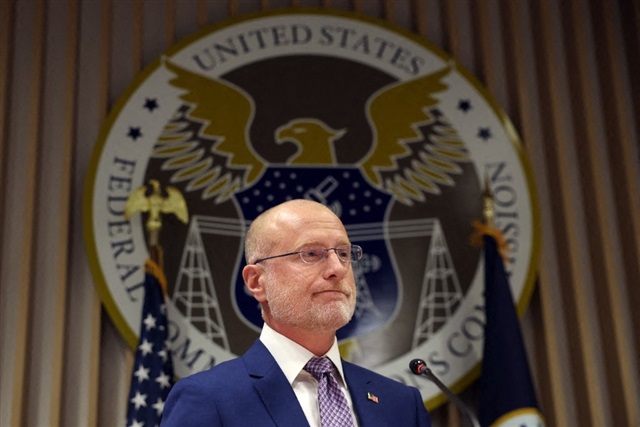
The Federal Communications Commission (FCC) added both product categories to its Covered List on July 28 after a White House-convened interagency body determined that they posed unacceptable supply-chain and cybersecurity risks. The restrictions are based on where equipment is produced rather than the nationality of its manufacturer.
Though formally covering foreign-made products, the action is expected to fall most heavily on Chinese suppliers, including humanoid robot maker Unitree and inverter leaders Sungrow Power Supply and Huawei. Reuters reported that the Trump administration intends the measures to protect the US AI supply chain from disruption, data theft and cyberattacks while encouraging domestic manufacturing.
New models lose FCC approval
Equipment on the FCC's Covered List cannot receive the authorisations required for entry into the US market. Applicants must certify that their products are not covered equipment when seeking approval.
The restrictions took effect upon publication and primarily apply to robot and inverter models that have not yet been released. The FCC also retains authority to revoke authorisations previously granted to existing models.
Companies can seek conditional approval. Foreign power-inverter manufacturers may submit products for review by either the Department of War or the Department of Homeland Security, while advanced robotic devices require approval from the Department of War.
A favourable determination would exempt an individual product or class of products from the Covered List. The FCC is expected to grant exemptions to many non-Chinese suppliers, following a similar approach used for foreign-made drones and routers, Reuters reported.
The FCC said the restrictions do not identify individual companies because the covered equipment is defined by production location. This distinguishes the action from earlier measures naming Huawei, ZTE, Hikvision, Dahua and other Chinese technology groups.

Credit: FCC
Robots raise surveillance concerns
The US national security determination covers advanced robotic devices produced abroad, including connected humanoid and quadruped robots.
Regulators said networked robots create attack surfaces that could allow outsiders to manipulate data or physical operations. Their sensors and connectivity could also be used to collect sensitive information, support foreign intelligence activities, or enable remote control.
"Advanced robotic devices collect data that could be leveraged by malign actors to surveil Americans, enhance the capabilities of foreign intelligence services, or to remotely commandeer the robots," the FCC determination said.
The restrictions could have significant implications for Unitree, one of the world's leading humanoid robot suppliers. The Chinese company holds just under one-fifth of the global market, according to Counterpoint Research, and is among three Chinese groups dominating the emerging sector.
Unitree has also partnered with Nvidia to use Blackwell AI chips in its robots. Nvidia has said data generated by the machines would remain in the US and that Unitree's largest American customers are academic and research institutions.
US officials remain concerned that connected robots deployed in laboratories, factories and other sensitive environments could gather operational data or interfere with critical functions.
The action arrives while AI-enabled humanoid and quadruped robots are moving closer to adoption in manufacturing, logistics, research and consumer applications. Washington is seeking to limit foreign dependence before the market reaches broader scale.
Inverters become an AI infrastructure risk
Power inverters have also emerged as a strategic concern because they connect solar systems, batteries and other direct-current power sources to electricity grids and data-centre equipment.
Their remote connectivity allows operators to monitor and manage installations, but the same functions may create pathways for cyberattacks, surveillance or coordinated shutdowns.
The interagency determination warned that foreign firms could switch off inverters, collect and remove data, facilitate remote access or exploit the equipment through cyberattacks.
As inverter-based resources become more common across power grids, officials fear vulnerabilities could accumulate across thousands of connected systems and threaten critical infrastructure.
The restrictions are particularly relevant to the US data-centre expansion supporting artificial intelligence. AI facilities require large and dependable electricity supplies, increasing the importance of secure inverters linking renewable power and battery storage to computing infrastructure.
China is the world's largest inverter producer, led by Sungrow and Huawei, and Chinese suppliers have expanded their Western market share through lower pricing.
US authorities are seeking to avoid dependence comparable to China's position in rare-earth minerals, where Beijing's control over critical materials has provided significant geopolitical leverage.
The Department of Defense was already prohibited from procuring solar cells, modules or inverters made by foreign entities of concern. The FCC action extends the restrictions to the broader commercial market by blocking approvals for new foreign-produced models.
China's embassy in Washington urged the US to stop what it described as the smearing and sanctioning of Chinese companies. It warned that Beijing would take necessary measures against actions causing material harm to Chinese interests.
The FCC decision links robotics, energy systems and AI infrastructure under a single national security framework. Its immediate commercial effect will depend on the scope of exemptions, but the direction is clear: connected machines and the hardware powering AI data centres are becoming part of the widening US technology divide with China.
Article edited by Jerry Chen
