
CONNECT WITH US
Sign out

Apple's reported pursuit of Chinese memory chips revives supply chain and geopolitical tensions

, DIGITIMES, Taipei
0

Credit: AFP

Apple is once again exploring Chinese memory suppliers as a prolonged shortage driven by artificial intelligence (AI) demand reshapes the semiconductor supply chain, according to a Bloomberg report.

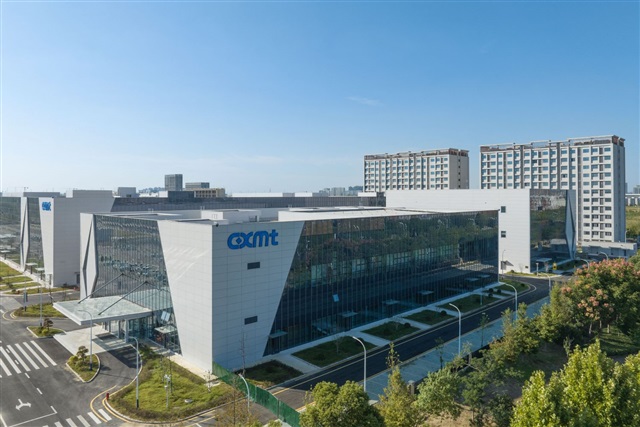
Bloomberg reported that Apple is in talks to source memory chips from China's ChangXin Memory Technologies (CXMT) and Yangtze Memory Technologies Co. (YMTC) for devices sold exclusively in China. The discussions are ongoing, and no agreement has been finalized.

The reported move comes as Apple grapples with soaring memory costs that recently prompted the company to raise prices across Macs, iPads, Vision Pro, and other products. Apple has attributed the increases to an unprecedented rise in memory prices as AI data centers consume growing volumes of DRAM and NAND flash.

If completed, the arrangement would expand Apple's memory supplier base beyond Samsung Electronics, SK Hynix, and Micron Technology, giving the company greater supply flexibility at a time when AI infrastructure spending has tightened global memory availability.
A familiar strategy returns

The reported discussions are not Apple's first attempt to incorporate Chinese memory into its supply chain.

In 2022, Apple planned to source NAND flash chips from YMTC for iPhones sold in China after qualifying the company as a supplier. The effort was ultimately abandoned following opposition from Washington after YMTC was added to the US Commerce Department's Entity List, which effectively prevented the company from obtaining American technology without a license.

The current proposal appears designed to reduce political sensitivity by limiting the use of Chinese-made memory to products sold within China, rather than devices destined for international markets.

Politics remains the biggest obstacle

Unlike the Commerce Department's Entity List, neither CXMT nor YMTC's inclusion on the Pentagon's so-called 1260H list legally prevents Apple from purchasing their products. However, the designation identifies companies that the US believes support China's military, making any commercial relationship politically contentious.

According to Bloomberg, Apple CEO Tim Cook has appealed to Trump administration officials, including Treasury Secretary Scott Bessent, in an effort to reduce potential political fallout should the company proceed with the purchases.

The proposal has already drawn criticism from lawmakers. House Foreign Affairs Committee chairman Brian Mast said allowing Apple to source memory from the two Chinese companies would undermine US efforts to secure semiconductor supply chains and compete with China in artificial intelligence.

AI reshapes supply chains

The renewed interest in Chinese memory suppliers also reflects broader structural changes in the semiconductor market.

Memory manufacturers, including Samsung, SK Hynix, and Micron, have increasingly prioritized high-margin AI server products, particularly high-bandwidth memory, as hyperscale cloud providers accelerate AI infrastructure investments. As production shifts toward those applications, supplies for smartphones and personal computers have tightened, driving up prices across the consumer electronics industry.

For Apple, adding Chinese suppliers could provide both additional capacity and greater negotiating leverage with existing vendors. However, the strategy also illustrates the increasingly difficult balance multinational technology companies face between securing resilient supply chains and navigating intensifying geopolitical scrutiny surrounding advanced semiconductor technologies.

Article edited by Jack Wu