

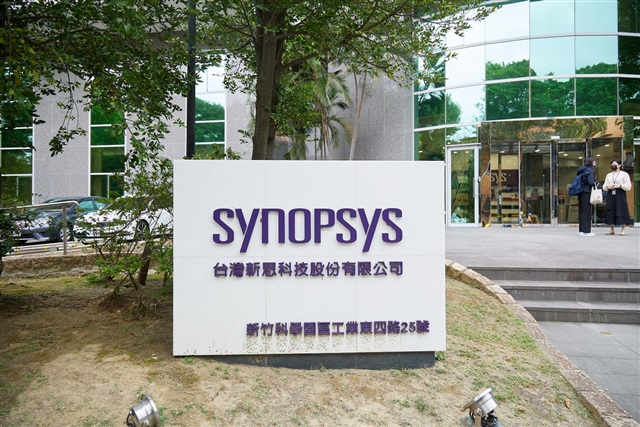
Synopsys reported divergent regional performance in the second quarter, with China showing sequential growth while North America and Europe declined, as demand patterns for semiconductor design tools and simulation software remained uneven across end markets.
The company said China's strength was not driven by a fundamental shift in underlying chip design conditions, while broader demand in the US and Europe was supported by industrial, automotive, aerospace, and defense applications tied to simulation and system analysis software.
Ansys effect and easy comparisons
CEO Sassine Ghazi said regional trends broadly aligned with prior expectations and that China's performance did not reflect a structural improvement in design activity. "No, overall, actually, I'll comment on China first, but then the rest of the regions are - there are no surprises per se," Ghazi said. "The design start environment in China remains challenged, given all the restrictions and the cumulative impact of the restrictions."
He said the company continues to take a cautious approach to forecasting China's demand. "As we've communicated, we're fairly pragmatic when it comes to our guide in China," he said.
CFO Shelagh Glaser said China's sequential growth was influenced by the inclusion of Ansys following its acquisition and easier year-over-year comparisons. "That did show strong growth, and that's also the addition of Ansys because we didn't have Ansys," Glaser said. "It was a pretty easy comparison versus the second quarter."
The West holds steady outside semiconductors
Ghazi said declines in North America and Europe did not reflect any major structural change in customer demand, but rather variation across end markets. "As far as the US, Europe, et cetera, where we are seeing strength as outlined in our S&A portfolio in several areas outside of semi, like aerospace and defense, automotive, industrial, and that's happening across the board," he said.
He added that strength in simulation and system analysis (S&A) tools was helping offset weakness in more cyclical semiconductor design activity in some regions. The company said demand trends varied by end-market exposure, with AI-related semiconductor development remaining the strongest driver globally, while industrial and automotive applications provided additional support outside chip design cycles.
Article edited by Jerry Chen