
CONNECT WITH US
Sign out

Whetron Expands Push Into AI Vehicle Safety and Smart Sensing Systems

, Taipei
0

Credit: DIGITIMES

Whetron Electronics, a Taiwanese automotive electronics supplier specializing in vehicle sensing systems, said it is positioning itself for the next wave of growth by expanding into AI-powered driver assistance technologies, smart cockpit sensing, and advanced radar applications.

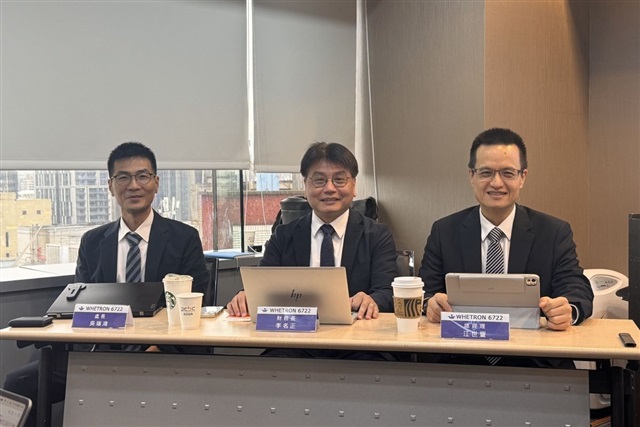
Speaking at a media briefing and investor conference on May 14, President Shih-Feng Chiang outlined the company's future growth strategy, citing tightening global vehicle safety regulations — particularly in Europe and Japan — where demand is rising for advanced driver-assistance systems, blind-spot monitoring, and camera-based safety technologies.

The company sees rising opportunities in commercial vehicle safety systems such as Blind Spot Information Systems (BSIS), Moving Off Information Systems (MOIS), and Camera Monitoring Systems (CMS), while also expanding into millimeter-wave blind-spot detection for motorcycles and smart key technologies.

Chiang said Whetron's competitive strengths stem from its automotive-grade engineering capabilities, multi-sensor integration expertise, and long-term commitment to research and development, adding that the company remains optimistic about long-term industry demand despite broader market uncertainties.

Expanding beyond traditional parking sensors

Whetron's business remains heavily anchored in parking assistance systems, which account for roughly 72% of revenue, according to the company. Camera systems contribute another 15%, while the remainder comes from products including automotive security systems and blind-spot detection technologies.

The company is increasingly investing in higher-value intelligent sensing technologies as automakers accelerate development of software-defined and AI-enabled vehicles.

The company said it has built capabilities across ultra-high frequency, ultrasonic, millimeter-wave, and optical imaging technologies, while also maintaining integrated electromechanical system design capabilities.

The company invests between 8% and 10% of annual revenue into research and development, focusing on technologies such as AI vision systems, millimeter-wave radar, intelligent cockpit sensing, and automated parking.

Two products in particular — an edge AI sensing platform and a 60 GHz smart cockpit sensing radar — are being positioned as key next-generation growth drivers.

AI sensing platform targets vehicle safety market

Chiang said the company's newest AI sensing technologies are aimed primarily at the original equipment manufacturer market and are closely tied to vehicle safety applications.

Commercial revenue contribution is expected to begin as early as 2028.

The edge AI sensing platform has already been delivered to customers for evaluation across two-wheel vehicles, passenger cars, and commercial vehicles, though commercialization timelines will depend on customer development schedules.

The company's strategy reflects a broader shift within the automotive industry toward AI-driven sensing architectures capable of interpreting real-world driving environments more dynamically than conventional rule-based systems.

Southeast Asia expansion gains importance

Whetron is also expanding its manufacturing footprint across Asia as automakers diversify supply chains and regional production bases.

The company currently operates in Taiwan, China, Thailand, Malaysia, and Japan, while also maintaining joint ventures in Indonesia and India.

According to the company, its new Thailand factory, scheduled for completion in 2025, is expected to become a key production hub beginning in 2026 as customers ramp up mass production programs in Southeast Asia.

The company said customer certifications and equipment installation are already underway at the facility.

Thailand currently contributes about 11.5% of company revenue, a figure Whetron expects to rise to 15% by 2027.

Chiang said Southeast Asia's automotive landscape is undergoing rapid change as Chinese automakers expand aggressively into markets traditionally dominated by Japanese brands.

Paradoxically, he said, the growing competition is encouraging Japanese automakers to accelerate upgrades in safety and intelligent vehicle systems — a trend that could benefit suppliers such as Whetron with deep ties to Japanese manufacturers.

Deep ties to Japanese automakers

Whetron said Japanese automakers account for 82.4% of total revenue, underscoring the company's long-standing role as a Tier 1 supplier within Japanese automotive supply chains.

Taiwanese customers, including motorcycle makers, account for 8.3% of revenue, while Chinese and European automakers contribute 6.6% and 2.3% respectively.

Executives said working closely with Japanese automakers gives Whetron early visibility into vehicle development road maps and emerging technology trends, allowing the company to participate in early-stage product development.

Because Japanese automakers maintain exceptionally high quality and reliability standards, executives added, successfully entering those supply chains also strengthens Whetron's ability to expand globally.

Margins improve despite higher costs

Although first-quarter 2026 revenue declined slightly amid softer market conditions, the company reported a notable improvement in profitability.

Gross margin rose to 20.5% from 17.3% a year earlier, driven by an improved product mix and tighter cost controls.

Operating margins, however, remained under pressure due to higher research and development spending, employee incentive programs introduced after the company's stock market listing in January, and increased tax burdens at overseas subsidiaries.

Still, the company said it maintains a strong cash position and continues to expand its asset base steadily, which the company said would support sustainable long-term growth as the automotive industry moves deeper into the era of intelligent and software-defined vehicles.

Article translated by Elaine Chen and edited by Jerry Chen