

CONNECT WITH US
Sign out

Etron sees DRAM rally stretching into 2027 as shortages persist

, Taipei
0

Credit: DIGITIMES

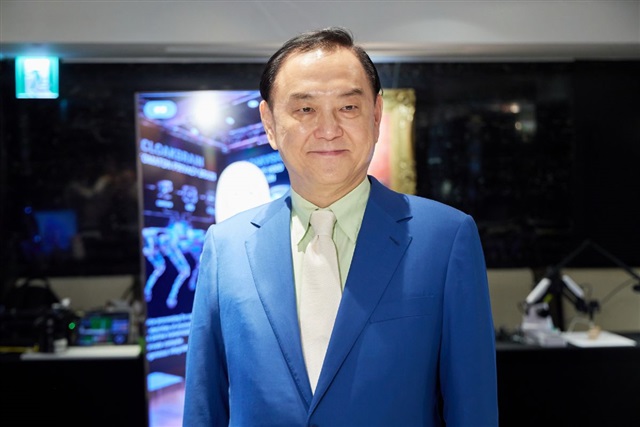
The memory market is entering a new growth cycle as artificial intelligence demand reshapes supply and pricing, with DRAM prices still rising 10% to 20% a month, according to Nicky Lu, chairman of Etron Technology.

Lu said Etron's order visibility now extends to the end of 2026, while the company also has a clear view of business conditions into the first half of 2027. Customers are "coming with cash in hand" to secure supply, he said.

Memory prices have returned to a fair and reasonable range, Lu said. He compared the current upturn to the "Rule of Wen and Jing," a prosperous period in China's Han dynasty, and said Taiwan could move toward an "Emperor Wu" era if it accelerates the integration of memory and logic IC technologies. The "Rule of Wen and Jing" refers to a period of stable governance and economic prosperity in China's Han dynasty, circa 180–141 BC, which laid the foundation for the expansionist reign of Emperor Wu that followed.

Memory forecasts climb

Lu said global semiconductor output was about US$880 billion in 2025 and could rise to US$1.3 trillion to US$1.4 trillion in 2026, with memory accounting for nearly half of the total.

The market had estimated at the beginning of the year that global DRAM output value would reach about US$400 billion. By the end of April, the estimate had been revised up to US$560 billion. Including Flash and other products, the overall memory market could reach US$700 billion to US$800 billion, Lu said.

HBM's share of AI-related memory is expected to rise from about 10% to roughly 50% by the end of 2026. Lu said that does not mean demand for DDR4 or DDR5 is weakening. Instead, the overall market is expanding sharply, with DDR5, GDDR, and other DDR-related products still supported by demand.

Shortage seen as structural

The recent surge in DRAM prices is not short-term speculation, Lu said. It reflects a change in the industry's supply-demand structure.

As advanced HBM adopts 4nm and 5nm logic processes, DRAM products are becoming more complex and more expensive to produce. The boundary between DRAM and logic chips is also becoming less distinct, which has pushed memory prices back into what Lu called a reasonable and fair range.

DRAM spot and contract prices have continued to rise, with gains of about 10% to 20%, Lu said. The pace of increases may slow after the end of the third quarter of 2026, but prices are expected to stay high as new AI demand continues to enter the market.

Lu said the memory shortage had already been anticipated in 2025 and is now a structural change. Traditional DDR4 and DDR5 supply will remain tight until at least mid-2027, as major suppliers are unlikely to return to older processes to expand capacity.

Notebook and smartphone makers also cannot quickly change memory architectures, he said. Such transitions usually take at least two years.

Taiwan's memory opening

Lu said the shift could create a new opportunity for Taiwan's memory industry.

Taiwan has a leading position in wafer manufacturing and a strong semiconductor supply chain. If it can strengthen memory and logic IC integration, Taiwan could take on a more important role in the AI era, he said.

Etron reported consolidated revenue of NT$2.735 billion for the first quarter of 2026, up 336% from NT$627 million a year earlier and 71% from NT$1.595 billion in the previous quarter. Net profit attributable to the parent company reached NT$614 million, with earnings per share of NT$1.88, more than tripling from a year earlier.

The company posted a second consecutive quarterly profit and reached a record high.

Lu said Etron's current profit performance is not yet its best because the company has continued to invest heavily in research and technology over the past several years. Still, with order visibility through the end of 2026 and a clearer outlook for the first half of 2027, he said the company remains optimistic as its AI and memory investments begin to show results.

Etron targets DDR4 and edge AI

For DDR4 products, where demand remains tight, Etron said it will supply 4Gb to 16Gb configurations. The products will support applications including WiFi-7 and WiFi-8 routers, 10G PON, cable modems, gateways, switches, set-top boxes, network cameras, IoT devices, printers, SSDs, and industrial control systems.

WiFi router shipments have grown steadily in recent years, while technology transitions have accelerated. WiFi-7 is expected to become the mainstream generation, and WiFi-8 has already entered early technology planning, Etron said.

The company said it has completed a product lineup covering 1Gb DDR2, 1Gb to 8Gb DDR3, and 4Gb to 16Gb DDR4. Its high-capacity 16Gb DDR4 products have also entered early testing for WiFi-8 applications.

Etron is also expanding into edge AI and privacy computing. The company is developing compact AI devices that combine memory and logic computing to eventually create personal AI devices roughly the size of a USB drive.

The company will continue to advance its MemorAiLink platform, focusing on low-power and fast-response edge AI applications. The platform supports small language models and vision-language models.

Lu said the memory industry is now in a period similar to the Han dynasty's "Rule of Wen and Jing," with AI pushing the broader semiconductor sector into a new period of growth. Taiwan needs to move faster in memory and logic IC integration, he said, if it wants to play an "Emperor Wu" role in the AI era.


Article translated by Sherri Wang and edited by Jerry Chen