

CONNECT WITH US
Sign out

AI server tracker: ASPEED sees sustained growth as AI server demand strengthens BMC market outlook

, DIGITIMES Asia, Taipei
0

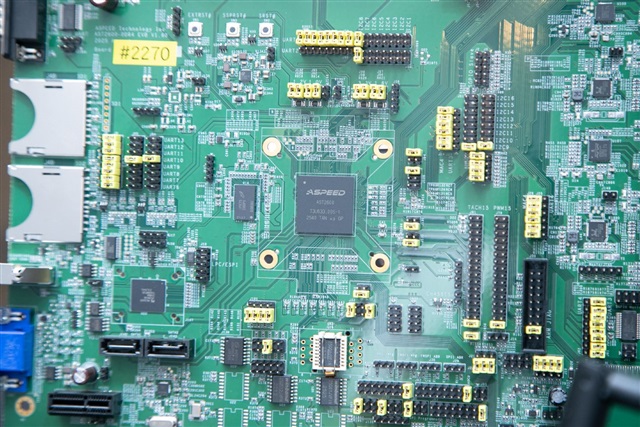
Credit: DIGITIMES

ASPEED Technology has continued to show strong revenue momentum in recent years, supported by structural changes in global data center infrastructure and the rapid expansion of AI server deployments.

The company's performance trend over the past several years reflects a clear acceleration beginning around the early stages of the AI infrastructure buildout cycle. After a relatively stable period in earlier years, revenue growth accelerated meaningfully as cloud service providers increased spending on server refreshes and high-performance computing capacity. In the most recent period, the company has sustained elevated sales levels compared with pre-AI infrastructure demand conditions.

This shift is largely thanks to the rising complexity of AI servers, which typically integrate multiple GPUs, consume more power, and require more demanding thermal and system management. These conditions have heightened the importance of Baseboard Management Controllers (BMCs), which monitor system health, control power and temperature, and enable remote server management.

As AI clusters scale into large deployments across hyperscale data centers, BMCs have become a standard component in nearly every server node, supporting both operational reliability and large-scale fleet management.

Strong position in a concentrated BMC ecosystem

ASPEED has maintained a dominant position in the global BMC market, benefiting from its deep integration into server platform ecosystems and long-standing relationships with major CPU and server architecture providers.

The company's products are widely deployed across enterprise servers and cloud infrastructure platforms, where its chips are used for system monitoring, remote diagnostics, and firmware-level control functions. This embedded role has created a relatively high barrier to entry for competitors, reinforcing ASPEED's position within the server supply chain.

The structure of the server industry has also supported ASPEED's growth. The broader ecosystem is highly concentrated, with a small number of CPU providers, server original design manufacturers, and cloud hyperscalers driving procurement decisions. Once a BMC solution is designed into a reference server architecture, it is typically deployed at scale across multiple product generations.

This dynamic has enabled ASPEED to benefit directly from expansions in server shipments, particularly as AI infrastructure investment accelerates across North America and Asia.

AI server complexity supports value and pricing trends

Beyond unit demand growth, ASPEED has also benefited from increased product complexity and average selling price.

AI servers require more advanced system management capabilities compared with traditional enterprise servers. These include support for higher sensor density, more sophisticated thermal monitoring systems, and integration with liquid cooling environments. In addition, security requirements have increased, with demand for stronger remote authentication and system-level monitoring features.

As a result, BMCs have evolved from relatively simple control chips into more advanced management processors with enhanced computing capabilities and expanded firmware functionality.

This shift has contributed to improved product value, as newer generations of ASPEED's chips incorporate more advanced architectures designed for high-density computing environments.

AI infrastructure expansion drives sustained demand visibility

The continued expansion of AI infrastructure remains a key driver of ASPEED's demand visibility. Hyperscale cloud providers have been increasing capex for AI training and inference clusters, driving sustained demand for server components.

Recent market commentary has highlighted continued strength in BMC demand tied to AI server deployments, particularly from large US cloud service providers. At the same time, supply chain constraints in the broader server ecosystem have led to longer lead times for key components, including management chips.

While tighter supply conditions may influence near-term shipment timing, industry participants view the structural demand trend for AI infrastructure as supportive of longer-term growth.

Outlook supported by structural data center transformation

Looking ahead, ASPEED's outlook is closely tied to the ongoing transformation of global data centers toward AI-centric computing architectures. As workloads shift from traditional enterprise applications to AI model training and inference, server design requirements are becoming more complex and more power-intensive.

This transition is expected to reinforce demand for advanced system management solutions, particularly in large-scale distributed computing environments where reliability and operational efficiency are critical.

Industry analysis suggests that the role of BMCs will continue to expand as data centers scale AI clusters and adopt more heterogeneous computing architectures combining GPUs, CPUs, and specialized accelerators.

In this context, ASPEED's position as a key supplier of server management chips places it within a structurally growing segment of the semiconductor market. While cyclical fluctuations in server demand may continue, the broader trend toward AI-driven infrastructure expansion is expected to remain a key support factor for the company's performance trajectory.

Article edited by Jack Wu