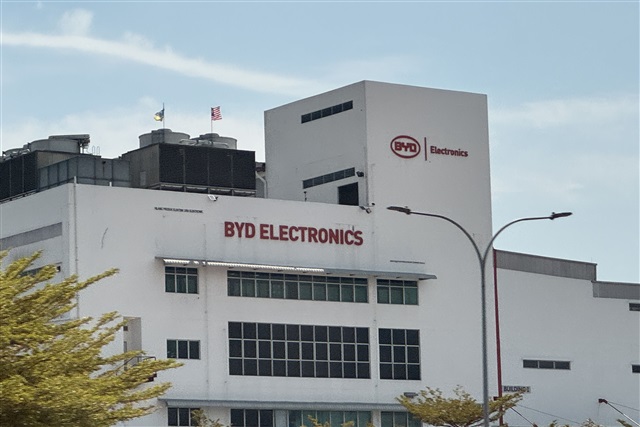
Chinese components maker BYD Electronics saw a drop in profits for the first quarter of 2026. The subsidiary of EV maker BYD reported its first-quarter results on April 28, including a 95.5% annual drop in profit attributable to its parent company, hitting CNY27.83 million (US$4.1 million).
BYD Electronics posted a revenue of CNY38.2 billion for the quarter, up 3.5% year-over-year, while gross profit dropped 14.4% to CNY1.99 billion compared to the first quarter of 2025. Earnings per share dropped to CNY.0.01.
In its announcement, the company explained that the significant decline in profits was mainly due to exchange losses caused by currency fluctuations. It also cited changes in the product mix, putting some pressure on gross margins and profit levels.
Currency shifts have eaten into the company's profits since last year. Investment firm Jefferies downgraded BYD Electronics from Buy to Hold in March and lowered its price target from HK$42.00 (approx. US$5.36) to HK$35.00, according to Investing.com. This was reportedly the result of profit and margins expectations falling short for the second half of 2025 and a weak outlook among analysts for the company's core metal casing business.
Investing.com reported that while BYD Electronics had announced a revenue for the second half of 2025 that was broadly in line with its targets, the period saw its gross margins slide 1.7% compared with last year to 5.3% due to a stronger renminbi, particularly as 50-60% of its sales related to Apple products are denoted in US dollars. The company's metal casing products also faced weaker demand.
Structural challenges ahead
Other factors may have played a role in the manufacturer's weak profit results. Jefferies noted several structural concerns for the company, including pressure on BYD Electronics' average selling prices (ASPs) due to Apple's decision to source lower-priced aluminum casings for its iPhone Pro and Pro Max models. The investment firm also mentioned the wider industry possibly adopting 3D-printed glass casings and metal components for high-end products, which could eventually displace BYD Electronics's computer numerical control (CNC) machining processes.
BYD Electronics ranks among China's top electronics manufacturing service (EMS) firms and has been an original equipment manufacturer (OEM) for clients including Apple, Samsung, and Nokia. Facing slower demand for consumer electronics and growing competition, the company has, since last year, sought to expand beyond mobiles into the automotive electronics and AI server markets.
However, Investing.com cited Jefferies last month in reporting that the manufacturer's EV component business remains slow and that its turn toward the AI data center infrastructure business remains nascent, although it noted that the company had passed qualification for liquid cooling and power supply components for US cloud providers and Nvidia.
Jefferies analysts saw the launch of a foldable iPhone expected in late 2026 with higher value content and growing AI data center and EV sales as positive drivers for BYD Electronics starting this year. Nevertheless, given currency fluctuations and possible structural trends, the analysts cut the company's revenue and profit forecasts for 2026 to 2027 by 10-11% and 28-37%, respectively.
Article edited by Jack Wu