CONNECT WITH US
Sign out

Taiwan drones enter Ukraine battlefield, transport model drives global market expansion

, Taipei
0

Credit: DIGITIMES

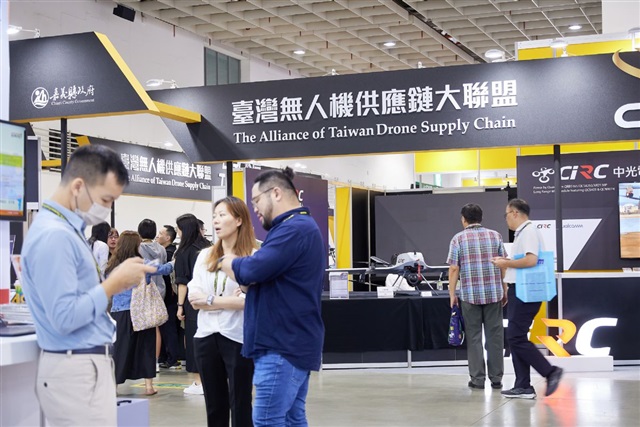
Taiwan's expanding drone exports to Central and Eastern Europe, largely transshipped to Ukraine, underscore growing supply-chain and security implications. Growing shipments and combat deployment create opportunities for Taiwan to deepen industrial partnerships, complicate European procurement dynamics, and push democratic allies to reduce reliance on China for critical drone components and logistics.

A pair of reports from Taiwan's Research Center for Democracy, Society, and Emerging Technology (DSET) detail how the island's drone export market has increasingly targeted Central and Eastern Europe, with Poland and the Czech Republic emerging as major gateways. DSET found that most drones shipped from Taiwan to those countries are subsequently forwarded to Ukraine and deployed in front-line operations, a trend with significant implications for global military supply chains and international partnerships.

According to statistics cited by DSET, nearly 130,000 drones were exported from Taiwan to Poland and the Czech Republic in 2025, with most units transshipped to Ukraine. By the first quarter of 2026, Taiwan's drone exports to Europe had already exceeded the full-year total for 2025. The majority of these exports fall into the first-category weight class — between 250 grams and 7 kilograms — and are typically employed for light reconnaissance or attack roles suited to asymmetric tactics, such as first-person-view swarm operations on the Ukrainian battlefield.

DSET highlights that current Taiwan-Ukraine links are mainly business-to-business arrangements covering components such as flight control boards, batteries, motors, and airframes. While cooperation remains limited to component exchange rather than formal government-to-government programs, the reports argue these commercial ties could evolve into longer-term partnerships involving joint production and technology transfer as Ukraine seeks to boost domestic drone capacity.

Despite Europe being Taiwan's largest market, DSET notes that the depth of cooperation lags behind Taiwan's relationship with the US, where collaborations more often include technical cooperation, joint production, and standards development. Exports to Europe are frequently for low-cost, small drones procured outside government channels, resulting in unstable demand, whereas US procurement is more institutionalized.

Industry voices warn that China still dominates critical component supply chains. Max Luo, president of the Taiwan National Drone Industry Association, said Ukraine aims to produce 7 million drones annually by 2026 but remains heavily dependent on Chinese components. Luo urged Taiwanese firms to strengthen non-China supply chains, pursue component certification, scale up production of batteries and communication modules, and leverage advanced process technologies such as TSMC's six-nanometer chips to increase international visibility and help allies reduce supply-chain risks.

Article translated by Jingyue Hsiao and edited by Jerry Chen