
CONNECT WITH US
Sign out

Mitsubishi Electric, Toshiba, Rohm open power semiconductor merger talks

, DIGITIMES Asia, Taipei
0

Credit: AFP

Japan's power semiconductor sector is moving toward consolidation, with Rohm, Toshiba, and Mitsubishi Electric entering negotiations to integrate their power chip businesses, according to Yomiuri Shimbun and Nikkei. The talks target scale in electric vehicles, AI data centers, and power infrastructure, where demand for power control semiconductors is rising.

The companies aim to reach a basic agreement as early as March 27, with a potential announcement to follow, according to the same reports. If completed, the combined entity would hold close to 10% global market share, making it the second-largest power semiconductor grouping after Infineon.

Scale race in power semiconductors

Japan's Ministry of Economy, Trade and Industry data show Mitsubishi Electric holds about 2.8% global share and Toshiba 2.7%, while Rohm remains a leading domestic supplier. While individually subscale, together, the three companies would gain critical mass through integration, strengthening competitiveness against European leaders and fast-rising Chinese rivals, according to Okinawa Times.

The alliance aims to combine design, development, and distribution capabilities across automotive, industrial, and infrastructure applications, improving cost structure and accelerating deployment of next-generation power semiconductors.

EV slowdown, AI demand shift

The consolidation push reflects both cyclical pressure and structural demand. Slowing EV growth and intensifying competition from Chinese suppliers have weighed on Japan's power semiconductor makers. At the same time, AI-driven expansion in data centers and electrified infrastructure is expected to sustain long-term demand.

Power semiconductors are increasingly critical in energy efficiency and power conversion, positioning the segment at the center of EV platforms, rail systems, and AI server infrastructure.

Denso bid complicates talks

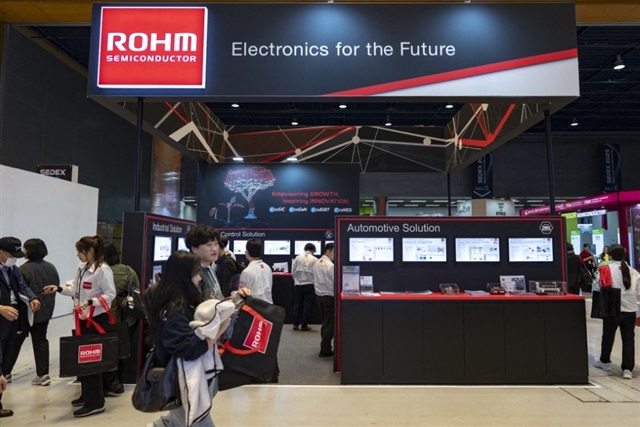
The talks are complicated by a competing acquisition proposal from Denso, a key supplier within the Toyota group. Denso has proposed acquiring Rohm and already holds about 5% of its shares, with existing collaboration in EV and next-generation vehicle development, according to Jiji Press.

Rohm has established a special committee of independent directors to evaluate the Denso proposal against the three-way integration with Toshiba and Mitsubishi Electric, focusing on long-term corporate value.

Rohm internal divide emerges

Internal divisions within Rohm are shaping the outcome. Sources indicate factions supporting Toshiba, Denso, or Mitsubishi Electric, while senior management is largely opposed to a full acquisition by Denso. Rohm has moved to include Mitsubishi Electric in the talks to consolidate internal support for a multi-party alliance.

The company's special committee will compare both paths, weighing independence through alliance against deeper integration into the automotive supply chain.

Credit: AFP

Credit: AFP

Three-way integration expands

Rohm and Toshiba had already been exploring integration in power semiconductor production. The current framework expands that structure, with Mitsubishi Electric — long an advocate of industry consolidation — joining the negotiations.

Japan's power semiconductor restructuring had been expected to center on two blocs: Rohm–Toshiba and Denso–Fuji Electric, supported by government-backed investment initiatives. Denso's direct approach to Rohm disrupted that balance and opened the door for Mitsubishi Electric to step in.

Companies confirm ongoing talks

Mitsubishi Electric and Rohm said on March 26–27 that the reports were not based on official announcements, but confirmed they are evaluating various strategic options. Both companies said they will disclose developments promptly if decisions are made.

While consolidation has long been discussed within the sector, particularly by Mitsubishi Electric, progress has been slow until now.

Industry consolidation stakes

The proposed integration underscores a broader shift in Japan's semiconductor strategy. Power semiconductors, essential for electrification and AI-era energy systems, are becoming a focal point of industrial policy and supply chain resilience.

Without scale, Japanese manufacturers risk losing ground to global leaders and Chinese competitors. Whether Rohm proceeds with the Toshiba–Mitsubishi Electric alliance or accepts Denso's offer will shape Japan's position in a market increasingly defined by consolidation, capital intensity, and geopolitical competition.

Article edited by Jack Wu