
As geopolitical tensions escalate, China's AI industry development is shifting from the application layer to underlying computing power and core chip technologies, with GPU- and AI chip-related companies becoming key focal points for both capital and policy resources. The Hurun Research Institute recently released the Hurun Global Unicorns Index 2025.
To be included on the AI list, the threshold has risen to CNY9.5 billion (approx. US$1.4 billion), an increase of CNY3.5 billion from last year. The entry threshold for the top ten hit CNY73 billion, more than three times that of 2025, reflecting the upward revision in capital market valuations of China's AI companies. The ranking is primarily based on market capitalization, with listed companies calculated using closing prices as of January 9, 2026, and unlisted companies assessed based on peer valuation levels or recent financing results.
Capital markets elevate computing power over applications
The ranking reveals that the average market capitalization of the top 50 AI companies reached CNY54 billion, a year-over-year increase of 2.4 times, with five companies already surpassing the CNY100 billion mark. This indicates that capital market assessments of China's AI industry are no longer limited to technological potential but are increasingly reflected in actual valuation levels. Among the top 10 companies, as many as seven are AI chip or computing power-related players, and the top three positions are all occupied by GPU and AI chip manufacturers, underscoring that computing power has become the core of China's AI industry.
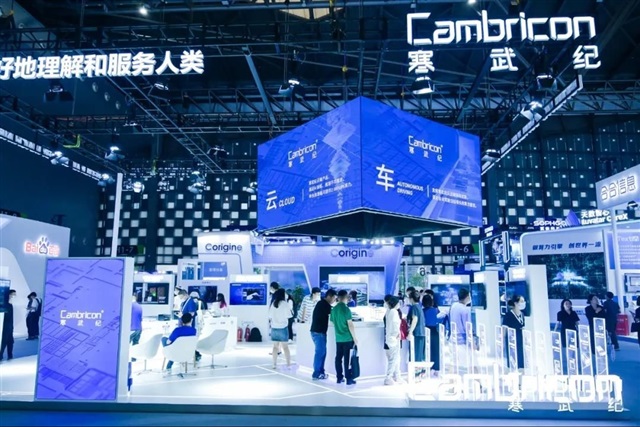
Cambricon tops the list with a market capitalization of about CNY630 billion, up 165% year-over-year, maintaining its position as China's leading AI chip company. Moore Threads ranks second with approximately CNY310 billion, emerging as a representative domestic GPU player, while MetaX ranks third with about CNY250 billion. Horizon, Rockchip, Biren Technology, and IP provider VeriSilicon also rank near the top, demonstrating how computing power-oriented the list is.
US controls accelerate domestic ecosystem
According to Hurun Research, the shift is linked to the US's export controls on high-end AI chips, forcing China to accelerate the development of an independent GPU and AI computing ecosystem and rapidly turning related companies into focal points of policy and capital market attention.
21 unlisted companies made the top 50 list this year. Within the 18 newly listed companies, more than half are AI chip or computing power–related firms. There are a total of 14 computing hardware companies, an increase of nine from the previous year, making it the fastest-growing category among all subsegments.
Valuation logic shifts
Areas such as data analytics and decision-making, content generation, machine vision, and autonomous driving continue to maintain a certain presence, but the market's valuation logic has clearly shifted. Compared with purely application-driven scenarios, capital is more focused on whether companies control computing power, core IP, and platform-based scalability, making alliances between application-layer players and computing power platforms an important factor.
Looking at geographic distribution, Beijing and Shanghai together account for about 60% of the companies on the list, with first-tier cities representing more than 80%. Beijing leads with 19 companies, followed closely by Shanghai with 14, highlighting that high-end computing power R&D, model innovation, and capital concentration effects remain highly concentrated in major core cities.
Although Nvidia still holds an overwhelming advantage in terms of market capitalization and technological maturity in the global GPU market, the combined market capitalization of China's top three computing power companies has already approached CNY1.2 trillion. Hurun Research believes that as China's domestic AI demand continues to expand, policy support intensifies, and the local computing ecosystem gradually takes shape, the global visibility of China's GPU and AI chip companies over the next five years still has room for sustained improvement.
Article translated by Emily Kuo and edited by Jack Wu