CONNECT WITH US
Sign out

SoftBank spearheads Japan's next-gen AI memory push

Chiang, Jen-Chieh, Taipei
0

Credit: AFP

SoftBank and Japanese partners are advancing a government-backed project to develop next-generation memory technology aimed at enhancing AI and supercomputer performance. The initiative, involving RIKEN, Intel, the University of Tokyo, and Taiwan's PSMC, targets prototype completion by fiscal 2027 and mass production by fiscal 2029, Nikkei Asia reports.

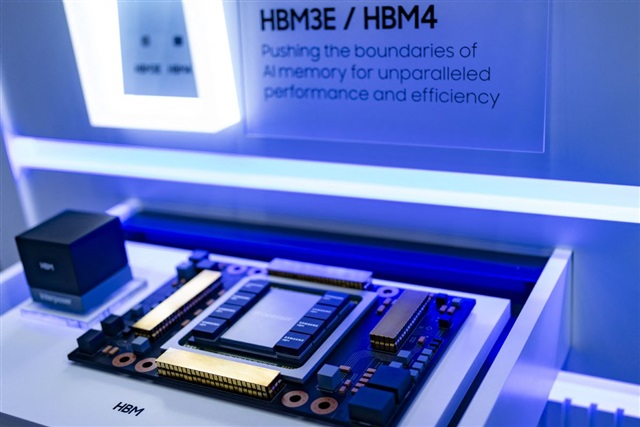
SoftBank's newly established developer SaiMemory is spearheading the project, with Fujitsu and others collaborating. The memory aims to offer two to three times the storage capacity of current high-bandwidth memory (HBM) while consuming about half the power and costing similarly or less. Intel will supply the core stacking technology, developed with funding from the US Defense Advanced Research Projects Agency (DARPA), which vertically stacks power, computation, and storage chips to increase density and reduce data transmission distances.

Additional cooling and data transfer technologies will integrate contributions from the University of Tokyo. Manufacturing and prototyping support will come from Shinko Electric Industries and PSMC. The project plans to raise roughly JPY8 billion (US$52 million) by fiscal 2027 to complete prototype development. SoftBank will invest approximately JPY3 billion through SaiMemory, with Fujitsu and RIKEN jointly providing around JPY1 billion. The Japanese government also plans subsidies via its next-generation semiconductor program.

The strategy includes SaiMemory managing intellectual property and IC design while outsourcing production to foundries. This marks a significant effort by Japanese companies, many of which exited memory manufacturing around 2000. Fujitsu ceased in-house production after 1999, and Elpida, a former DRAM maker, went bankrupt in 2012 before being acquired by Micron Technology.

The project's success could play a key role in revitalizing Japan's semiconductor and memory sectors, fostering renewed competitiveness in a field dominated by international players.

Article translated by Jingyue Hsiao and edited by Jerry Chen