
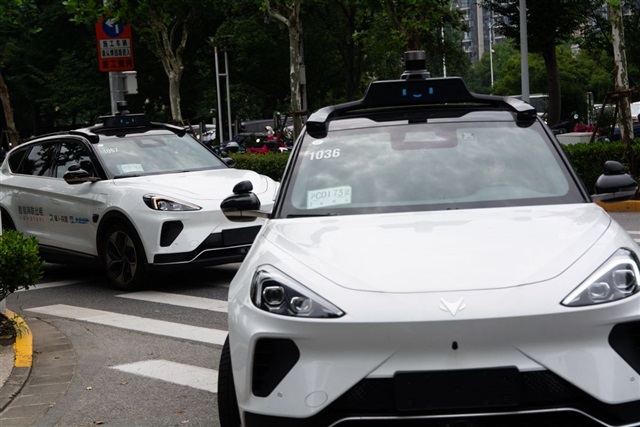
China's push to dominate the future of intelligent transport reached a milestone this week as the Ministry of Industry and Information Technology (MIIT) granted its first approvals for the mass production of "Level 3" (L3) autonomous vehicles.
According to the South China Morning Post, the permits, awarded to state-owned giants ChangAn Automobile and BAIC Group, authorize the assembly of electric vehicles capable of steering, accelerating, and braking without human intervention under specific conditions. Crucially, Level 3 autonomy allows drivers to legally take their hands off the wheel, though they must remain ready to intervene if the system requests help.
The move signals Beijing's intent to transform China from a market of enthusiastic early adopters into a global laboratory for the most advanced automotive software.
Controlled autonomy
While the approval marks a regulatory breakthrough, the leash remains short. The two approved battery-electric models are restricted to designated "test zones" comprising specific city streets and highways.
According to technical filings, the vehicles operate under different operational envelopes:
The Changan Model: Designed for urban congestion, the system manages navigation through crowded city streets at speeds up to 50 kilometers per hour (roughly 31 mph).
The BAIC Arcfox Model: Targeted at regional transit, this vehicle is permitted to operate autonomously on highways and expressways at speeds reaching 80 kilometers per hour (50 mph).
While the Ministry did not provide a definitive timeline for when these vehicles will appear in showrooms, the granting of production licenses means assembly lines can technically begin moving immediately.
The architecture of redundancy
Industry experts view this milestone as a systemic "stress test" that integrates vehicle manufacturing, high-precision sensors, software algorithms, and data governance. For the manufacturers involved, the shift from L2—where the driver is the primary fail-safe—to L3 requires a radical overhaul of vehicle hardware.
Engineers at BAIC New Energy described the Arcfox Alpha-S (L3 Edition) as a fortress of digital redundancy. Powered by Huawei's ADS system, the vehicle is equipped with 34 high-performance sensors, including a triple-LiDAR array that provides a 360-degree high-resolution map of its surroundings.
The architecture is designed with full-link safety backups, a BAIC representative said. For every critical function—steering, braking, power, and positioning—there is a secondary system ready to take over instantly if the primary fails.
To prove its reliability, the Alpha-S completed over 800,000 kilometers (approx. 500,000 miles) of equivalent mileage testing, covering a vast library of "edge case" scenarios. Similarly, ChangAn Automobile has anchored its entry on its proprietary "Tianshu" intelligent system, marking a transition toward a vertically integrated tech stack.
The 'ODD' guardrails
Despite the high-tech hardware, the rollout remains tethered to a strict Operational Design Domain (ODD). An ODD defines the exact conditions—weather, lighting, and road type—under which the computer is allowed to drive.
The leap from L2 to L3 is a milestone, but it must be managed with extreme caution, an industrial analyst told Shenzhen Securities Times. Currently, the approved models are restricted to highways and urban expressways where traffic flow is relatively predictable.
An industrial expert emphasized that these strict boundaries are intentional. The goal is to accumulate operational experience without inviting catastrophic risk, he noted. As the data matures, the 'fences' around these vehicles will gradually move outward.
Liability and the 'Black Box'
Perhaps the most significant aspect of this program is the legal framework. During this trial phase, vehicles must be operated by designated entities, carry specific insurance, and be subject to constant remote monitoring.
The Ministry has made the stakes clear: the government is maintaining a "kill switch" over the program. If a vehicle is involved in a traffic violation or an accident, or if a manufacturer fails to fulfill its data security obligations, the pilot may be suspended or terminated.
In a market defined by a "quantity over profit" struggle, the ability to sell true hands-free driving could provide a much-needed premium edge for domestic automakers fighting to survive a brutal price war. For the global automotive industry, China's approach offers a blueprint for how a state can force the evolution of a technology that has spent a decade "just around the corner."
Article translated by Elaine Chen and edited by Jack Wu