
CONNECT WITH US
Sign out

US advances massive drone purchase as Taiwan firms seize new opportunity

, Taipei
0

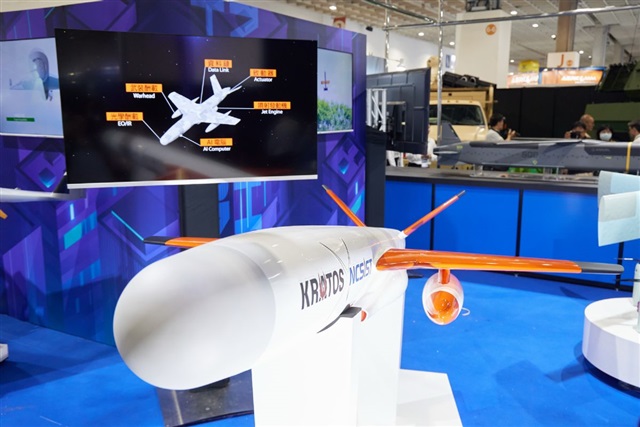
Mighty Hornet IV is scheduled for field tests in the US in January 2026. Credit: DIGITIMES

The US and Taiwan plan to accelerate military drone cooperation in 2026 as Washington advances a large procurement program and Congress moves forward with legislation calling for joint development. The efforts are expected to create opportunities for Taiwanese manufacturers in key technologies, supply chains, and overseas markets, according to industry executives.

The US Department of Defense launched the Drone Dominance Program in late September, a multiyear initiative valued at up to US$1 billion that aims to acquire more than 300,000 low-cost one-way attack drones by 2027. The program will unfold across four phases to rapidly field expendable systems for US forces, according to local reporting.

Phase one begins in February 2026, when the Pentagon plans to select 25 qualified vendors for live-fire evaluations. The first 30,000 drones must be delivered by July 2026. Requirements include a unit price of roughly US$5,000, a minimum 10-kilometer range, a 2-kilogram payload, and 20 minutes of endurance. Vendors must also show a monthly production capacity of more than 1,000 units.

Defense bill adds joint development plan

The 2026 National Defense Authorization Act includes a mandate for the US and Taiwan to begin joint development and production programs for unmanned and counter-unmanned systems by March 2026. The systems are intended for use by both the US military and Taiwan's armed forces.

Industry executives in Taiwan said the developments encourage local manufacturers to strengthen their domestic role while expanding internationally. Thunder Tiger, which operates a factory in the US, said it intends to compete for Drone Dominance Program orders. The company holds the only Blue UAS certification in Asia, giving it direct access to US government procurement channels.

Taiwanese supply chain draws US interest

Executives in Taiwan's drone sector said many US defense-technology startups have strong innovation capabilities but lack the supply-chain depth needed to scale production to the levels the Pentagon seeks. Companies, including Skydio and Anduril, have turned to Taiwan to secure manufacturing support.

Skydio sources about 70% of its components from Taiwanese suppliers, according to people familiar with the matter. Anduril has opened an office in Taiwan and is working with the National Chung-Shan Institute of Science and Technology, or NCSIST, on region-focused drone development. The collaborations run alongside broader procurement discussions.

Engagement between Taiwan and the US has increased over the past year. US delegations visited Taiwan twice to meet suppliers, while a drone industry alliance led by AIDC toured multiple US states and signed several cooperation agreements.

Foreign investment momentum builds

Industry representatives said US officials have explored whether Taiwanese companies could form a supply-chain group to invest in US production. Washington has also considered establishing component and assembly operations in Taiwan to support its drone strategy. NCSIST president Li Shih-chiang said the unmanned-systems industrial park in Minxiong, Chiayi, already includes several foreign tenants.

At the Taipei Aerospace and Defense Technology Exhibition in September, NCSIST signed cooperation agreements and memorandums of understanding with six foreign defense firms, including Anduril, AeroVironment, MARTAC, and Northrop Grumman. AeroVironment, maker of the Switchblade loitering munition procured by Taiwan, plans a long-term partnership involving technology transfer and maintenance capabilities for future systems.

Mighty Hornet IV advances toward US trials

Kratos, developer of the US military's Valkyrie stealth drone, is working with NCSIST on the Mighty Hornet IV attack drone. The platform has a reported range of up to 1,000 kilometers and uses optical payloads and onboard computing modules. Kratos provided the baseline airframe, while NCSIST has led the redesign and plans to integrate additional Taiwanese suppliers to support full local production at scale.

People familiar with the project said Mighty Hornet IV is scheduled for field testing in the US in January 2026. If the evaluations meet the requirements of both sides, the program will move into pre-production planning.

Article translated by Sherri Wang and edited by Jack Wu