

CONNECT WITH US
Sign out

US allows Nvidia H200 chip exports to China, but Beijing may impose restrictions

Jerry Yang, Taipei
0

Credit: AFP

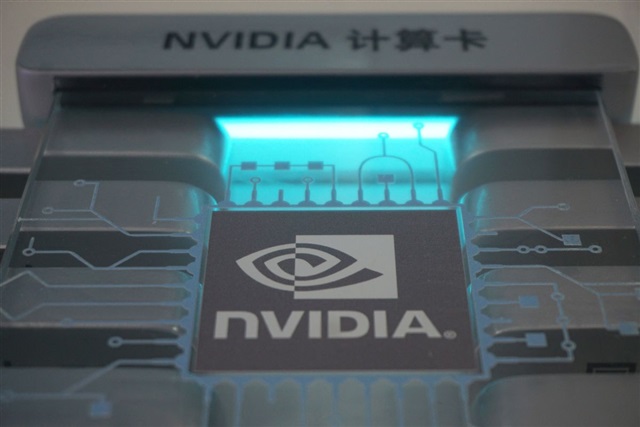
Despite US President Donald Trump's decision to permit the export of Nvidia Corporation's advanced H200 chips to China, reports indicate that Beijing might enforce limitations on their use as part of China's ongoing strategy to boost domestic semiconductor self-sufficiency. Chinese authorities remain cautious while evaluating how these imports fit within national technology goals.

According to the Financial Times, Reuters, and CNBC, Chinese regulators are still deliberating procedures to allow the restricted acquisition of the H200 chips. Similar to the earlier case involving the H20 chip—where exports were authorized by the US but access was curbed by Chinese rules—the superior capability of the H200 makes it highly sought after by major Chinese technology companies. Buyers could be subject to review processes requiring applications that justify why domestic alternatives cannot satisfy their demands, although no conclusive policy has been finalized.

China's regulatory considerations and domestic policy goals

Chinese agencies, including the National Development and Reform Commission (NDRC) and the Ministry of Industry and Information Technology (MIIT), may introduce additional measures to protect and promote domestic chipmakers. Such measures reportedly could involve prohibiting purchases of the H200 by Chinese public sector entities to maintain a level playing field for locally manufactured semiconductors. Beijing's resistance to widespread adoption of US-origin technology, particularly Nvidia's chips, reflects a broader strategic competition with the US.

Beijing has implemented various strategies to curb dependence on imported technology, ranging from intensified customs inspections on chip imports to energy subsidies for data centers relying on Chinese-made chips. These policies underscore China's aim to reduce reliance on Western semiconductor technology and enhance the competitiveness of its domestic semiconductor industry over the long term.

Chinese tech giants' mixed reliance on Nvidia chips amid supply challenges

Despite policy resistance, prominent Chinese companies such as Alibaba, ByteDance, and Tencent value Nvidia's advanced processors for their superior performance and maintenance advantages. While these firms use domestically produced chips for basic artificial intelligence (AI) functions, Nvidia's hardware remains the preferred choice for more demanding AI workloads.

Some companies have resorted to training AI models overseas to circumvent restrictions and gain access to cutting-edge Nvidia technology. Others combine previously stockpiled Nvidia chips, acquired before the export suspensions, with domestic components to develop advanced AI systems. Alibaba CEO Eddie Wu highlighted persistent shortages throughout the semiconductor supply chain, reiterating the appeal of Nvidia's latest chips.

US political concerns cloud export approval

Following the announcement, factions within the US government expressed reservations. Members of Congress from the Republican Party and the US-China Economic and Security Review Commission voiced concerns that permitting China access to advanced AI chips could undermine America's technological edge. They cautioned that better hardware availability might enable Chinese developers to substantially enhance their AI models and related technologies.

Market analysts have noted that the decision to allow only the H200 chip exports, without extending approvals to Nvidia's higher-end Blackwell or Rubin series, might limit the commercial impact on Nvidia's business in China. The company's revenue from China could see only modest growth unless access to more advanced products is authorized.

Article translated by Jingyue Hsiao and edited by Jack Wu
