
CONNECT WITH US
Sign out

Huawei converts R&D might into patent power and AI momentum

0

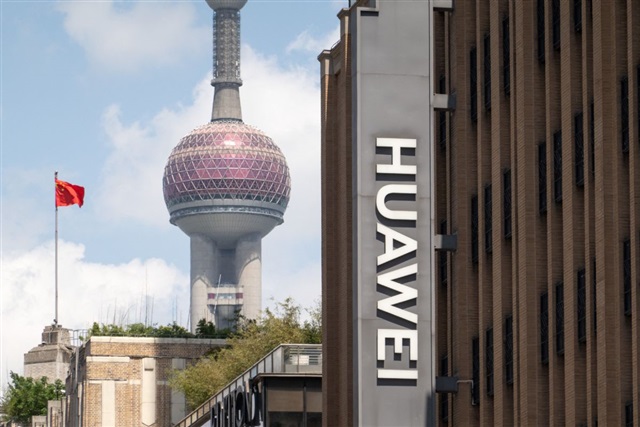
Credit: AFP

Under persistent US export restrictions, Huawei Technologies has doubled down on its vast patent portfolio and heavy R&D spending to reinforce its standing in global communications and computing. The company generated about US$630 million in patent and technology licensing revenue in 2024 while intensifying investments in AI computing, cloud infrastructure, and international standards initiatives.

Huawei's patent licensing surge

Huawei noted that although licensing revenue accounts for only a small portion of total income, its strategic weight is considerable. According to Nikkei Asia, the US$630 million total reflects both direct and indirect licensing as well as Huawei's widening presence across global value chains. Nearly 10% of Fortune 500 companies are now licensees of Huawei's intellectual property, underscoring its influence in established telecom networks and next-generation ecosystems.

According to Huawei Central, additional details shared at the company's 2025 Innovation and Intellectual Property Forum include:

● Over 2.7 billion 5G devices were licensed under Huawei's cellular-network patents by the end of 2024.

● More than 1.2 billion consumer electronics products adopted Huawei's Wi-Fi patents.

● In multimedia and video codecs, Huawei's patents covered over 3.2 billion devices.

● According to the World Intellectual Property Organization (WIPO), Huawei ranked first globally in 2024 with 6,600 PCT international patent filings, followed by Samsung Electronics (4,640), Qualcomm (3,848), LG (2,083), and CATL (1,993).

Huawei added that it has paid roughly three times more in royalties than it has earned, signaling that its patent strategy is designed for ecosystem influence rather than short-term profit.

Massive R&D spending backs innovation pipeline

Huawei's growing licensing influence is backed by massive R&D spending. The company invested CNY179.7 billion (US$25.3 billion) in 2024, representing 20.8% of annual revenue and ranking among the highest ratios in the global tech industry.

Over the past decade, Huawei's cumulative R&D investment has surpassed CNY1.24 trillion. By the end of 2024, it held more than 150,000 active patents worldwide, including 29,000 in the US and about 19,000 in Europe.

According to Alan Fan, Huawei's Vice President and Head of Intellectual Property Rights, the company published over 37,000 patents in 2024, contributed more than 10,000 proposals to standards bodies, and released over 1,000 academic papers. These achievements highlight Huawei's emphasis on deep participation in standards and research, not just patent ownership.

Huawei's Vice President and Head of Intellectual Property Rights, Alan Fan. Credit: Huawei

Huawei's Vice President and Head of Intellectual Property Rights, Alan Fan. Credit: Huawei

Patents driving Huawei's AI ambitions

Huawei is using its patent and technology licensing strategy to accelerate its presence in AI, cloud, and compute infrastructure. The company continues to enhance its in-house Ascend AI chips and related system platforms, targeting improved large-language-model (LLM) inference performance and building large-scale compute clusters to compete with Nvidia and other global leaders.

Recent patent disclosures reveal how these innovations extend into hardware.

➀ One approved patent, "Composite Electrode Material, Lithium Battery, and Electronic Device," introduces an organic-fibre composite electrode to reduce deformation during charging and extend battery life.

➁ Another pair of patents, "Thermally Conductive Composition, Its Preparation Method and Applications" and "Thermally Conductive and Heat-Endothermic Composition and Applications," show Huawei developing silicon-carbide-based materials to improve heat dissipation, potentially for its Mate 80 series.

These advancements demonstrate how Huawei converts R&D outcomes into tangible technology that reinforces both its ecosystem position and patent value.

Why this matters: strategic edge under US sanctions

Huawei's licensing strategy serves several critical functions:

● Revenue diversification: The total investment in 2024 licensing provides steady income alongside its consumer, enterprise, and hardware operations.

● Ecosystem influence: Wide-ranging licences across 5G, Wi-Fi, and multimedia strengthen Huawei's role as a standards leader.

● Defensive protection: A vast patent portfolio and strong R&D investment enhance Huawei's leverage in a geopolitically constrained environment.

● Technology leadership: R&D spending above 20% of revenue signals sustained commitment to innovation in AI, semiconductors, and networking.

Analysts note that while licensing still forms a small slice of Huawei's total revenue, its growth trajectory and strategic importance continue to rise, particularly as the firm regains momentum in smartphones, cloud computing, and automotive solutions.

From IP revenue to full-stack vision

Huawei is now turning its patent portfolio into full-stack technology platforms spanning AI computing, cloud infrastructure, and advanced connectivity. Backed by sustained R&D and over 150,000 active patents, the company is shifting beyond telecom equipment to position itself as a core player in the intelligent computing era.

Challenges remain in monetizing patents, competing with AI chip leaders like Nvidia, and managing supply chain limits. Yet 2024 showed solid progress, with record patent filings, stronger standards participation, and R&D spending above 20% of revenue.

Huawei's direction is clear: innovation is both its defense and its growth engine. Its intellectual property has become more than protection; it is the backbone of a self-reliant ecosystem and a tool of global influence.

Article translated by Levi Li and edited by Jerry Chen