CONNECT WITH US
Sign out

Taiwan turns China's export curbs into a test of industrial resilience

, Taipei
0

Credit: DIGITIMES

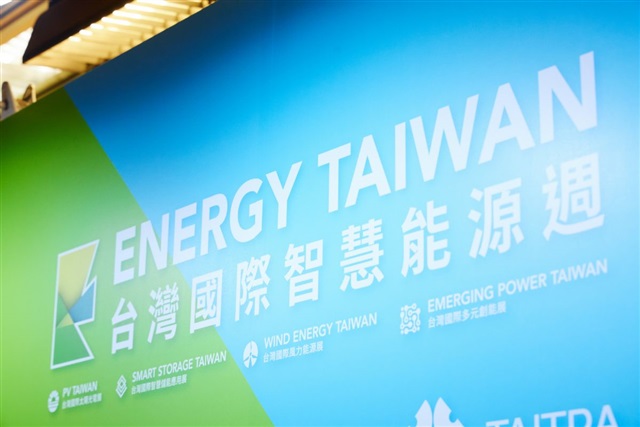
As Energy Taiwan and Net-Zero Taiwan 2025 open on October 29, Beijing has completed its second wave of export restrictions on lithium batteries and rare-earth materials. This move has jolted global clean-energy supply chains and forced industries worldwide to prepare for another round of structural reshuffling.

For Taiwan, the disruption poses not only a risk but also a strategic opportunity. International procurement standards are undergoing a fundamental shift: cost is no longer the top priority. Global buyers are now guided by security and quality, a transformation that could reshape how supply chains are established.

A global rethink of procurement logic

Industry sources note that China's curbs on key materials such as rare earths and lithium batteries have long been flagged in the risk assessments of global brands. But Beijing's latest "dual-lock" controls — a mix of export licensing and risk review — have prompted multinational clients to reassess both the quantity and quality of their clean-energy sourcing strategies.

Three major shifts are now taking hold:

Quality over price

Buyers are increasingly prioritizing product quality, service reliability, and long-term warranties over short-term cost savings. Given the long lifespan of lithium batteries, customers now expect suppliers to offer lasting maintenance support rather than the cheapest deal on the market.

Diversified supply is the new normal

This isn't merely about "de-Sinicization," but rather building resilience through multi-source procurement to avoid overreliance on any single country.

Energy storage demand remains robust

With wind and solar power gaining traction, energy storage systems (ESS) have become the backbone of the renewable transition. The rapid expansion of AI-driven data centers is also amplifying the need for grid stability and flexible power management — further underscoring the strategic importance of storage.

Taiwan's resilience as a competitive edge

Taiwanese manufacturers say the right response to China's tightening export regime lies in pragmatism and foresight, using supply-chain resilience to compensate for smaller economies of scale.

The first step is to diversify international operations. As global clients embrace multi-source raw material strategies, Taiwanese suppliers should integrate into vertically aligned global chains while introducing more local inputs. Though local materials may cost more, they ensure consistent quality, dependable delivery, and greater customer trust.

Another priority is rethinking scale and cost. Analysts point out that although China's lithium iron phosphate (LFP) batteries command over 70% of the global market, the cost difference between a 1-gigawatt and a 20-gigawatt production scale is surprisingly narrow. Even leading Chinese firms like CATL and BYD show only limited cost gaps, suggesting that scale alone is not the decisive factor.

Policy support will be critical

Policy continuity and targeted design, experts argue, will be key for Taiwan to bridge its scale gap. China's dominance in the battery sector was built on more than a decade of stable subsidies, while the US and Europe have since adopted similar industrial strategies to bolster domestic competitiveness.

Taiwan's government plans to launch a four-year, NT$5 billion (approx. US$162 million) behind-the-meter energy storage subsidy program in 2026 to foster local supply-chain autonomy. Beneficiaries are expected to include major players such as Formosa Smart Energy, Foxconn, Taiwan Cement (TCC), and Cold Electric.

However, industry insiders caution that the current policy does not explicitly include critical materials such as anode and cathode components. As a result, key domestic materials suppliers — including Aleees, HCM, Formosa Plastics Group, Foxconn, and Gigastorage affiliates — may continue to rely on imported sources due to cost considerations, limiting the program's overall impact and raising concerns of subsidy leakage.

A stress test for the global supply chain

China's new measures do not constitute an outright export ban but instead introduce risk reviews and quota limits. The real impact will depend on how strictly these controls are enforced and how China manages its internal production capacity. Analysts believe Beijing may use the policy to ease fierce domestic competition by selectively releasing capacity to maintain industry stability.

Ultimately, China's "dual-lock" strategy on lithium and rare earth exports amounts to a global supply-chain stress test. For Taiwan, aligning with the new international procurement order — emphasizing quality, long-term reliability, and diversified sourcing — while ensuring precise, sustained government support will be essential. Only then can Taiwan carve out a stable and autonomous position in the evolving global energy landscape.

Article translated by Elaine Chen and edited by Jack Wu