

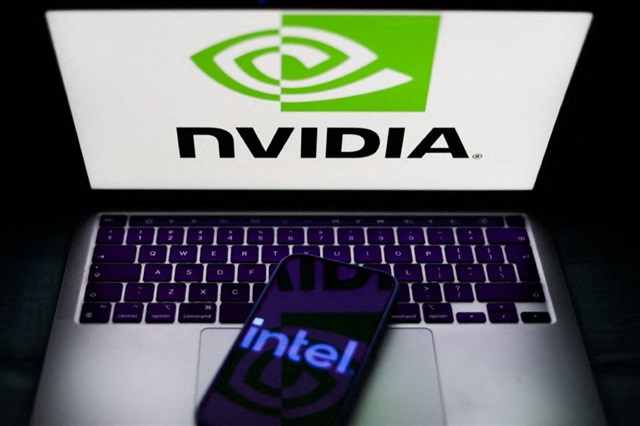
Intel has secured another high-profile backer. Following earlier commitments from SoftBank and the US government, Nvidia has announced a US$5 billion investment in Intel, buying shares at US$23.28 each. The move directly contradicts CEO Jensen Huang's dismissal in March of rumors that his company might take a stake in Intel.
A new strategic partnership takes shape
Nvidia and Intel are not presenting this as a purely financial arrangement. The two companies announced plans to co-develop multiple generations of data center and personal computing products. The collaboration aims to combine Nvidia's strengths in AI and accelerated computing with Intel's CPUs and broad x86 ecosystem, linked through Nvidia's NVLink interconnect.
For data centers, Intel will design a custom x86 CPU specifically for Nvidia's AI infrastructure platform, which Nvidia will integrate into its systems before selling to customers. On the PC side, Intel plans to launch x86 system-on-chips that incorporate Nvidia RTX GPU chiplets, targeting next-generation consumer and enterprise machines requiring tighter CPU–GPU integration.
Jensen Huang framed the partnership as part of a broader industrial transformation, arguing that AI is reshaping every layer of the computing stack. Intel CEO Lip-Bu Tan stressed that Intel's platforms, process technology, manufacturing, and advanced packaging will complement Nvidia's leadership in AI.
Implications for competitors and supply chains
The arrangement is expected to create headwinds for Advanced Micro Devices (AMD), Nvidia's primary rival in GPUs and x86-based servers. Analysts also warn that Nvidia may be "forced" to shift part of its GPU orders away from Taiwan Semiconductor Manufacturing Company (TSMC) and Samsung Electronics, complicating its foundry relationships.
TSMC in particular has long been viewed as the only company with the technical scale to meaningfully support Intel's foundry business. Whether TSMC will eventually take a direct stake in Intel is now a major point of industry speculation.
Government pressure and industry response
Industry insiders note that Nvidia's investment looks unusual when viewed strictly through a competition lens. The prevailing view is that Nvidia, like SoftBank, acted under heavy US government pressure. Washington regards Intel as the cornerstone of American semiconductor manufacturing and "too big to fail." Subsidies alone cannot secure Intel's future; it requires tens of billions in capital. As a result, more large players — from AMD and Qualcomm to Broadcom and leading cloud service providers — may be compelled to participate.
Past conflicts, future alignments
The Nvidia–Intel relationship has been fraught in the past. Two decades ago, Intel even considered acquiring Nvidia. In 2011, the two companies settled a major patent dispute, with Intel agreeing to pay Nvidia US$1.5 billion over five years for access to graphics technologies. The deal excluded x86 processors, flash memory, and certain chipsets, but laid the groundwork for coexistence.
Now, the companies are positioning themselves as partners in reshaping AI infrastructure and PC platforms, even as they remain competitors in several markets.
Strategic vision moving forward
For Nvidia, the partnership expands its influence beyond GPUs into integrated platforms that combine its CUDA-driven ecosystem with Intel's CPUs. For Intel, the investment provides both capital and a marquee partner that reinforces its claim to remain indispensable in the AI era.
The unanswered question is who will step up next. With Washington pressing industry players to bolster Intel, attention is turning to whether AMD, Qualcomm, Broadcom, or even TSMC will join Nvidia in taking a stake.
Article edited by Joseph Chen