

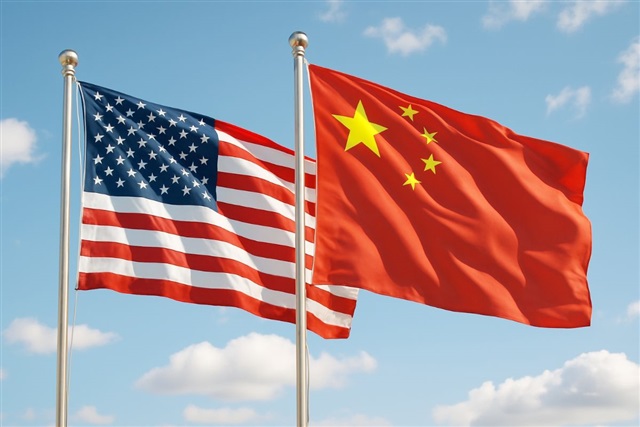
The US and China have each unveiled comprehensive AI action plans that position the technology as a pivotal element in national defense and foreign policy, effectively creating two major global AI camps. These strategies focus on competition for influence over third-party countries, where open-source AI models may play a decisive role.
US focus: AI in defense logistics and chip monitoring
On July 23, the White House released its AI action plan emphasizing the export of AI technologies—hardware, software, models, and applications—to allies. This includes accelerating data center development, tightening export controls on advanced semiconductor chips, and securing international leadership in AI governance.
The plan encourages open-source model development, highlighting its potential to set global standards, while noting the federal government's role in fostering an environment conducive to such openness.
The US approach stresses AI's transformative implications for military operations and logistics and mandates government agencies to enhance chip flow monitoring. It also critiques existing international AI governance frameworks as cumbersome and susceptible to Chinese influence, particularly concerning facial recognition and security surveillance standards.
China focus: Open-source AI diplomacy echoes Belt and Road, targets emerging markets
In contrast, China issued its Global Governance Action Plan for Artificial Intelligence on July 26, unveiled at the WAIC 2025. The plan advocates for accelerated digital infrastructure buildout, data supply improvement, and international cooperation to establish AI standards. It promotes unified computing power standards and green computing technologies, with a focus on supporting AI development in the Global South.
China aims to build cross-border open-source communities and reduce barriers to innovation, echoing frameworks akin to the Belt and Road Initiative but with an AI infrastructure focus targeting resource-scarce nations. Unlike the US plan, China's strategy places less emphasis on advanced chip controls, favoring the promotion of low-power chips.
US and China converge on AI controls but diverge in global strategies
Both countries show considerable overlap in controlling AI hardware, software, and applications, but diverge in geographic focus and regulatory approaches. While US cloud service providers have expanded data center presence globally, questions remain over the scope and impact of upcoming US policy-guided projects, such as potential Stargate expansions in the Middle East.
Southeast Asian countries may become key arenas for AI industry rivalry, caught between supply chains influenced by US and Chinese vendors. Alibaba Cloud and other Chinese tech firms maintain strong regional influence, posing challenges for US players. The US faces difficulties in maintaining dominance in open-source AI models, with Chinese firms like Alibaba Cloud, DeepSeek, and MiniMax leading in this space, outpacing Meta's Llama series. Although US companies dominate closed-source development, encouraging open-source contributions remains a strategic challenge amid fears of revealing proprietary technology.
The evolving US strategy suggests a calibrated regulatory environment aiming for AI industry growth alongside "policy guidance" that could direct AI firms toward specific service deployments. For countries outside the US-China axis, this intensifies dilemmas over alignment and technology partnerships. AI resources—chips, models, and infrastructure—are increasingly becoming instruments of geopolitical influence, transforming AI competition into a defining element of modern defense and diplomacy beyond pure industry concerns.
Article translated by Jingyue Hsiao and edited by Jack Wu
