
CONNECT WITH US
Sign out

Major Chinese tech firms see opportunities in LiDAR market

Staff reporter, Shanghai
0

Credit: DIGITIMES

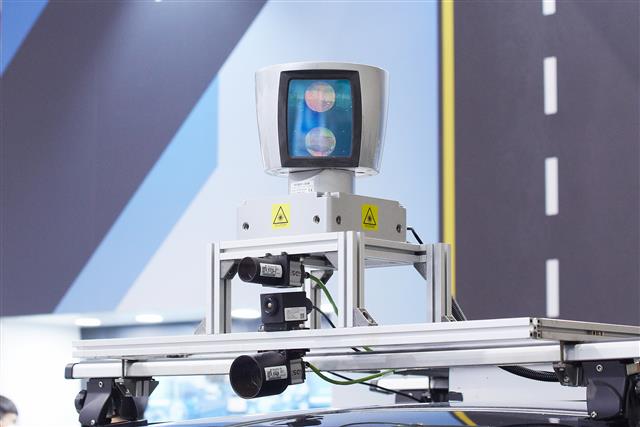
LiDAR (light detection and ranging) technology, a crucial element in autonomous mobility, has attracted great interest from major tech companies in China as they poured tens of millions of dollars into the high-potential sector.

On November 16, the Shanghai-based LiDAR startup Hesai Technology announced that it has raised an additional US$70 million in its extended Series D round from Xiaomi, bringing the total capital raised at this stage to over US$370 million. Lead investors for this round include Xiaomi, Hillhouse Ventures, and Meituan.

Hesai has been able to bolster investors' confidence with its LiDAR products, including the long-range hybrid solid-state LiDAR AT128 released in August. The sensor is said to measure an ultra-high frequency of 1.53 million points per second.

Hesai indicated that it has received robust orders for AT128 from major automakers such as Li Auto, Jidu, Hiphi, and Lotus. The company is expected to begin mass production of the sensor in 2022. Chinese corporate information app Tianyancha shows that Hesai has completed nine rounds of financing, having received funding from Xiaomi, Baidu, Onsemi, and Bosch.

With LiDAR becoming the new battleground for Chinese investors, Hesai is not the only company to receive huge funding lately.

Tanway Technology and Luminwave have each secured CNY 100 million (US$15.7 million) and CNY 50 million, respectively, during their Series A round. ABAX Sensing Electronic Technology and Ling Silicon Microelectronics have also completed their Series A round, while Litra has closed a strategic funding round.

In addition, both Innovusion and Zvision have raised a significant amount of funding during their Series B round, while Leishen has bagged nearly CNY 300 million during its Series C round.

At the beginning of 2021, Chinese EV maker Nio released its flagship ET7 sedan equipped with Innovusion's LiDAR. Shortly afterward, Aion, IM Motors, and Arcfox all announced that they would unveil Level 3 autonomous cars with LiDAR features between 2021-2022. The recently launched Avatr E11 smart electric SUV, co-created by Huawei, Changan Auto, and Contemporary Amperex Technology, is also equipped with three LiDAR sensors.

A Kaiyuan Securities report forecasts 2021 to be the first year of mass production for automotive LiDAR. It expects the Chinese LiDAR market size to reach CNY 10 billion by 2025 and CNY 100 billion in the long term.

However, the current high cost of LiDAR sensors continues to be an issue and could prevent autonomous cars from mass production. Livox, a subsidiary of Da-Jiang Innovations, currently prices its Horizon and Tele-15 LiDAR sensors at CNY 6,499 and CNY 9,000, respectively. Robosense's RS-LiDAR-M1 is sold at US$1,898 and Hesai's ultra-wide PandarQT LiDAR at US$4,999.

According to DIGITIMES Research, the price for LiDAR systems from Velodyne, Innoviz, and Ouster was averaged at US$5,000 per car during 2020, though both Velodyne and Innoviz are inclined to lower their LiDAR prices starting 2022. Luminar has also set a target to adjust its LiDAR price to below US$1,000 in upcoming years, while autonomous carmaker Mobileye is planning to develop its own LiDAR to limit the cost.

The price of the sensors could drop to as low as US$200 if large tech firms like Bosch and Huawei decide to begin volume production. Huawei's Intelligent Automotive Solution Business Unit had previously suggested the company would set its LiDAR price between US$100-200 in the future.

In terms of end products, Xpeng Motors' P5 sedan equipped with two LiDAR sensors is currently marketed at CNY 200,000. As LiDAR price is expected to drop over the next few years, more cars with such features could appear in the market.

Article translated by Kevin Cheng