The development of the software sector in Taiwan has been much slower compared to hardware manufacturing, which has been supported by large numbers of engineering talent.

But according to Jau Huang, chairman and CEO of digital multimedia software solution developer CyberLink, the software sector needs more business talent in business model, marketing and business planning than engineers.
Q: What are the constraints on the development of Taiwan's software industry in Taiwan?
A: The successful development of Taiwan's hardware manufacturing in the past 20 years has been supported by a large number of engineers. However, what the software industry needs is business experts rather than people with engineering backgrounds. But Taiwan has been relatively weak in cultivation of business experts, whose training relies more on various working experience than on school education.
While startup businesses quite dominate the software industry currently, few of them have been eventually successful mainly due to a lack of business expertise.
However, I am optimistic about the future development of Taiwan's software industry, for more individuals or teams are willing to attempt innovations. Such attempts will unavoidably experience failures but this is necessary training for business talent.
Q: CyberLink showcased FaceMe facial recognition engine at CES 2020. What is the main aea of application fo facial recognition in Taiwan?
A: Basically, facial recognition can be used in scenarios with IP cameras in combination with AI. In fact, facial recognition is mostly used in security surveillance such as in office and residential buildings. For retail operation, facial recognition can be used to recognize either customers' faces (personal identification) or their ages, sexes or other features for analysis of their purchasing preference. Facial recognition can also be applied to banking and insurance, but the Financial Supervisory Commission has not yet formulated related regulations and technical standards.
In addition, many of CyberLink's clients adopted FaceMe through cooperation with IoT device makers to create AI-based value-added application of IoT.
Q: What may constrain development of facial recognition technology in Taiwan?
A: Privacy is of general concern. Therefore CyberLink has not installed facial recognition systems in public space. But privacy is not a problem for use of facial recognition in office and residential buildings.
Besides, development of the technology hinges on enactment of relevant regulations and technical standards as well as reduction in cost for AI components. As AI entails large volumes of computing, AI chips are too expensive currently and cost reductions will depend on growing demand for IoT application. Wide application of facial recognition is expected to take off in 2-3 years.

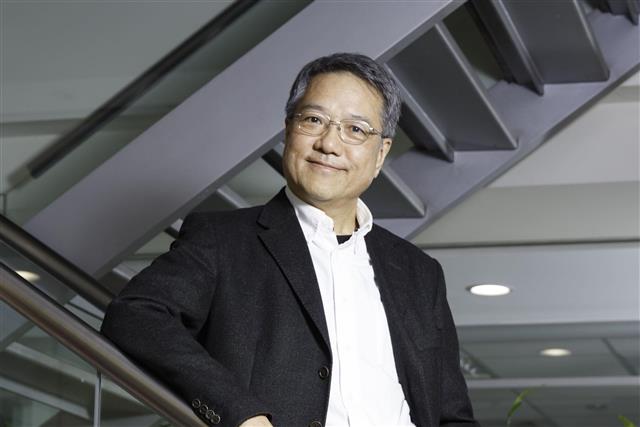
CyberLink chairman and CEO Jau Huang
Photo: Company
Article translated by Adam Hwang