
Financial institutions routinely process massive volumes of operational data, turning complex analysis into executive presentations for trend tracking, performance evaluations, and strategic decision-making. While routine, this process is notoriously time-consuming — especially under tight deadlines when managers request a deck on short notice. Manually extracting Excel figures, identifying insights, and designing polished slides within minutes presents a significant operational hurdle.
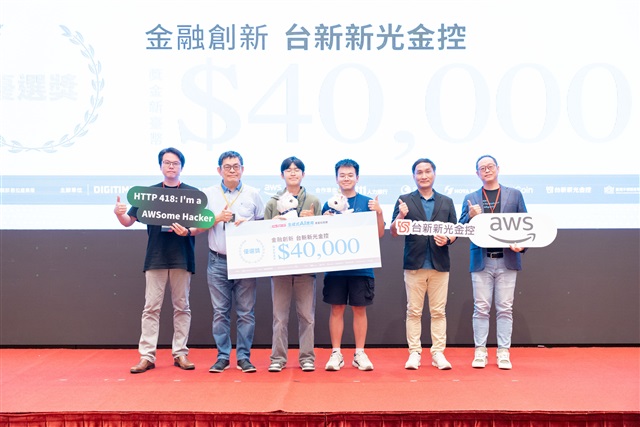
To tackle this workplace friction, a student team combining expertise from Feng Chia University's Department of Economics and Fu Jen Catholic University's Department of Psychology built an AI-powered financial analysis and deck generation platform. Competing in the "Taishin Financial Holdings: Financial Innovation" category, the team won top honors at the 2026 Taiwan Generative AI Applications Hackathon, organized by DIGITIMES under the guidance of the Administration for Digital Industries (ADI), Ministry of Digital Affairs (MODA). Amazon Web Services (AWS) served as the AI technology provider, delivering the generative AI and cloud services that powered the solutions.
Three-Step Workflow Tailored to Existing Corporate Templates
Drawing from their own academic project experiences, the team recognized that corporate environments face even greater pressures around data cleaning, trend summary, and strict template compliance. Tight turnaround times frequently compromise both analytical depth and visual quality.
To streamline this, the team designed an intuitive three-step workflow: users upload operational Excel files, import their company's master PowerPoint template, and set specific prompt parameters. By default, the system assumes a financial analyst persona to extract key metrics and write executive summaries. Users can also customize prompts to focus on specific product lines, risk assessments, or business units. Because financial firms enforce strict brand and formatting standards, supporting native corporate templates eliminates the need for manual reformatting.
Generating Native, Fully Editable Slides: The Core Technical Breakthrough
A primary technical hurdle was generating fully editable slide decks rather than static images. While many commercial AI presentation generators produce quick visual output by flattening content into images, this prevents financial professionals from updating figures, tweaking copy, or responding to executive feedback. Through extensive research and iteration, the team engineered a mechanism that outputs native, fully editable PPTX files.
The system architecture was constructed using Kiro, an AI-powered, agentic integrated development environment (IDE) and development platform created by AWS. The team noted that the development process highlighted the importance of prompt engineering and developer-AI collaboration, as raw AI code outputs required continuous guidance and iterative refinement.
Looking ahead, the team plans to incorporate automated email distribution and enterprise-grade security features—including access controls and authentication—to ensure sensitive operational data remains protected. Once integrated, the end-to-end pipeline will fully automate data ingestion, analysis, slide generation, and reporting workflows.