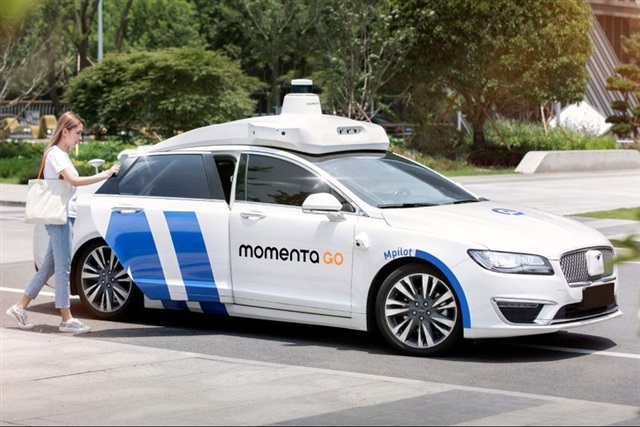
Chinese autonomous-driving software specialist Momenta posted a strong first-half performance, with gross margin reaching 73.2% and adjusted net loss narrowing by about 97%. Yet despite the sharp financial improvement, doubts remain over its longer-term prospects. Supply-chain sources say that as intelligent-driving technology matures, strong software algorithms alone may no longer be enough to build a durable competitive moat.
China's autonomous-driving software sector has already gone through several rounds of consolidation. As L2 driving systems became more widely adopted, weaker suppliers with limited competitiveness or order visibility exited the market. Others shifted toward L4 and L5 technologies, only to struggle with slow commercialization and insufficient financial resources.
After repeated market shake-outs, only a small group of stronger players remain, and Momenta is among them.
China's L2+ intelligent-driving market is now becoming more mature, while the competitive structure among specialist third-party solution providers is increasingly clear. According to Chinese media estimates, Huawei leads with roughly 25.5% market share, followed by Afari at 24.2%, Momenta at about 18%, Zhuoyu (formerly DJI Automotive) at 9.8%, and Horizon Robotics at 8.4%.
Software alone is no longer enough
Supply-chain sources say pressure on third-party suppliers is rising as China's automotive price war spreads into the hardware and software supply chain and automakers seek to regain greater control over core technologies.
Unless suppliers can build a broad ecosystem comparable to that of automotive Tier 1 supplier Huawei, or develop the kind of technology and capital moat enjoyed by battery leader CATL, competing independently is becoming increasingly difficult.
For Momenta, whose strength lies in autonomous-driving algorithms, an asset-light model and high margins remain clear advantages. Even so, it cannot escape the broader shift by automakers to reclaim technological autonomy, while also facing pressure from larger ecosystems such as Huawei's.
Chinese media analyses broadly divide the country's specialist autonomous-driving suppliers into three models, with considerable overlap between them and intense competition across the market.
Three models shape China's autonomous-driving market
The first is Huawei's full-stack model. As an integrated automotive Tier 1 supplier, Huawei combines intelligent driving, smart cockpits, in-vehicle optics, digital chassis and vehicle-cloud ecosystems. It can offer complete systems or supply individual components, creating a tightly integrated ecosystem that can make it difficult for automakers to disengage once they enter a partnership.
Some automakers remain wary of "losing their soul" and ceding too much control. Others have become more willing to work with Huawei as autonomous-driving technology matures and earlier concerns diminish.
The second model is deep integration with automakers. Afari, for example, has Geely Auto as a major shareholder, giving it relatively secure access to orders. To reduce its dependence on Geely, however, Afari has been expanding cooperation with other automakers including BAIC. Its broader development path is increasingly moving closer to Huawei's model.
The third is Horizon Robotics' chip-plus-software platform model. By tightly integrating core hardware and software, Horizon is positioning itself around an ecosystem comparable to the "processor plus operating system" structure of the PC era. In addition to forming a joint venture with Volkswagen to develop autonomous-driving chips, Horizon is also expanding into new areas including AI robotics.
Taiwanese autonomous-driving algorithm developers face a similar survival test, industry sources added. Taiwan's limited domestic market restricts opportunities to scale and refine products, while China's drive for greater hardware and software self-sufficiency has made it significantly harder for Taiwanese suppliers to enter Chinese automotive supply chains.

Credit: Chinese media estimates and industry sources cited in the article; compiled by DIGITIMES
Article translated by Levi Li and edited by Ysi Chen