

CONNECT WITH US
Sign out

Naver backs Anthropic in broader AI push

, DIGITIMES, Taipei
0

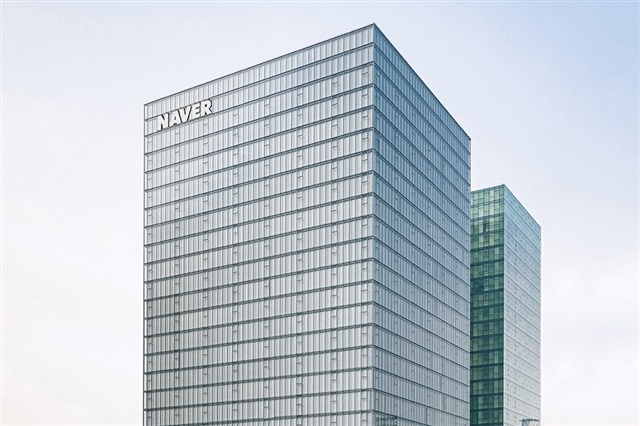
Credit: Naver

Naver has reportedly invested in US artificial intelligence developer Anthropic, adding another global AI company to a widening network that now spans frontier models, AI agents and large-scale computing infrastructure.

Naver Ventures, the South Korean internet company's US investment arm, invested in Anthropic late last year through a US venture-capital fund rather than buying shares directly, Korea Economic Daily reported. The investment was around KRW10 billion​ ​(US$7.08 million), though Naver has not publicly confirmed the amount or timing. The report also said Anthropic platform engineering and product executives visited Naver's 1784 headquarters in June to share AI agent technology with Naver developers.

The reported investment matters less for its size than for how it fits Naver's broader AI strategy. The company is increasingly combining outside AI technology with its own models, proprietary data and consumer services instead of trying to build every layer of the AI stack itself.

Anthropic connection deepens

Anthropic has expanded rapidly. The Claude developer raised US$65 billion in May at a US$965 billion post-money valuation, with run-rate revenue exceeding US$47 billion earlier that month. In April, the figure had been above US$30 billion, up from about US$9 billion at the end of 2025. More than 1,000 business customers were each spending over US$1 million annually, according to Anthropic.

The company is also securing large amounts of computing capacity. An agreement with Google and Broadcom covers multiple gigawatts of next-generation TPU capacity expected to come online starting in 2027. Claude is trained and operated across AWS Trainium, Google TPUs, and Nvidia GPUs.

For Naver, the more immediate connection is software. Claude Code has been deployed across Naver's entire engineering organization, with thousands of engineers using the coding agent.

That fits closely with Naver's effort to move AI beyond answering questions and toward completing actions.

Naver's 2025 Integrated Report describes an On-Service AI strategy that draws on proprietary data from user-generated content, shopping and local services. Agent N, AI Tab and Shopping AI Agent are designed to connect search with purchases, reservations and payments, creating a path from discovery and decision-making to action.

Naver is betting that its advantage lies in combining AI with search, commerce, local services and payment functions, where recommendations can lead directly to transactions rather than competing primarily on general-purpose models.

Nvidia adds the infrastructure layer

Naver is taking a similarly selective approach to computing infrastructure. Nvidia agreed to invest US$1 billion in newly issued Naver shares for a roughly 4.5% stake, while Brookfield will provide up to US$9 billion in financing for a US$10 billion AI infrastructure project, Reuters reported.

The project will expand Naver's GAK Sejong data center to 200MW by 2028 and use Nvidia's Vera Rubin and Blackwell platforms. Naver and Nvidia are also pursuing a longer-term plan for gigawatt-scale AI infrastructure in South Korea and overseas.

Their relationship extends beyond hardware. Naver is advancing HyperCLOVA X using Nvidia's Nemotron 3 Ultra open models together with its own proprietary data and training expertise. It has also joined the Nvidia Nemotron Coalition and plans to launch an AI agent platform using Nvidia software.

Taken together, the moves suggest a hybrid strategy rather than a retreat from Naver's own AI development.

Anthropic brings Naver closer to frontier-model and enterprise-agent technology. Nvidia supplies computing platforms and open-model technology, while Brookfield provides infrastructure capital. Naver continues to develop its own models while keeping control of the proprietary data and customer-facing services that connect search, recommendations and transactions.

The strategic question is therefore shifting from whether Naver can build every part of the AI stack itself to which layers it needs to own.

As frontier models become available from multiple providers, Naver's ability to combine those technologies with its own data and transaction-oriented services could prove more difficult for rivals to replicate than model access alone.

Article edited by Jerry Chen