Communication – for whatever purpose, be it trying to persuade the electorate to vote for you, to convince your audience to buy whatever product you're selling, to manage client relationships, or simply to become famous online through creating engagement – is, at its heart, an exercise in storytelling.
In today's visual-first world plagued with short attention spans and what can seem like an infinite number of e-mails and ads diverting our concentration, being able to fashion compelling video-based stories is increasingly crucial to successful communication. Attempts to automate communication can also seem generic and devoid of empathy and personalisation, consigning them to failure.
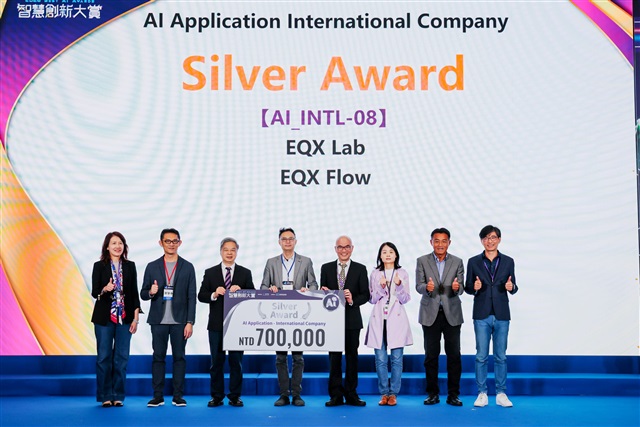
EQX Lab and its product, EQX Flow, aim to use artificial intelligence to enable the masses to successfully grab others' attention. By inputting a very simple text prompt, users will be able to generate videos that have the potential to go viral. Corporate sales teams will also be able to automate the creation of personalised, cinema-quality videos for client retention purposes.
EQX Lab is the brainchild of Benjamin Cheung. He studied computer animation at the Savannah College of Art and Design in the state of Georgia and then moved to Hollywood, where he worked for many of the major animation studios – Square, Disney, DreamWorks, Sony, and Lucasfilm – for roughly 15 years. He worked on Square's Final Fantasy: The Spirits Within, which came out in 2001 and was the world's first photorealistic computer-animated film (where the animated images appear as real-to-life as possible); and when he was at Sony Imageworks, on 2007's Beowulf.
But Cheung always knew that he wanted to return to Asia, and so he moved to Taiwan in 2010 to work for an animation company that counted some of his former employers as major clients. He was then poached by a cloud-computing company in China whose president at the time was Taiwanese. Cheung stayed with this company, which specialised in rendering (using a computer to generate [usually 3-D] images) for almost seven years. During this time, he grew the company’s staff count by roughly seven times and its revenue by a factor of 30.
Cheung had been the technical director for most of his projects in Hollywood – he was constantly using new tools and had to develop their back-end integration himself. This gave him enough confidence in his technical abilities to launch EQX Lab. He realised that even though there were already plenty of AI video-generation models, they all required a detailed prompt and only generated a somewhat passable video.
Instead, what if you could make a professional-quality video with just a simple click, or a single word, or a short sentence? That's what EQX Flow aims to do.
The tool is powered by the company's NEXES Engine, an AI pipeline that, from a single piece of user input, generates prompts, writes a script, composes a storyboard, and finally outputs a video. Chain-of-thought reasoning is used to come up with an emotional arc and narrative to the story. The system handles everything internally, so that the user doesn't need any technical knowledge to produce a cinematic result. Moreover, the engine creates five stories and, again using AI, measures how gripping they will be, choosing the best one to increase the chances of the chosen story going viral. (The engine pays particular attention to optimising the first three seconds of the clip, as these are the seconds that decide whether users continue watching or not.)
In the current prototype, users input a story idea (something as simple as "play tennis"), and then specify from a list of options the gender of the protagonist; the type of video (e.g., a sports/fitness video); its niche (e.g., a glow-up video); the length of the clip; the type of person that the creator himself/herself is (e.g., a no-nonsense expert); and the 'look' of the clip (e.g., commercial realism, cinematic realism, cyberpunk, vintage film, or anime). Cheung intends to add a 'director's cut' option in a later incarnation of the story engine, where users will be able to emulate, for example, Christopher Nolan's aesthetic.
EQX Flow will have two modes: fast and professional. The latter will be more sophisticated and, as a result, also more expensive (in his current prototype, it is about 2.5 times as expensive as the fast model). A tennis ball hitting a player in the face would look passably realistic in the professional-mode video; the fast mode would instead produce stylised visuals in a fraction of the time. Cheung says that directors often prefer the fast mode because it can produce unexpected scenes that they consider to be spontaneous.
The tool is also modular: users will be able to stop after each stage (e.g., script generation), tweak things, and then move onto the next stage. Directors who already have a script and storyboard might not need the story engine at all – instead, they will only use EQX Flow’s back end to generate the shots and make the actual video.
EQX Flow currently uses Google's generative AI models. This does not allow for the creation of violent, graphic, or adult material, a limitation that is in line with EQX Flow's business model and vision. They are also developing a model-agnostic pipeline, and plan to integrate additional leading AI video models to expand their creative possibilities and to reduce platform dependency.
The company's Face-Lock technology can also incorporate photos that users upload of themselves or their desired characters into the videos.
If non-specialists can now produce videos, should directors be worried about the future of their profession? Cheung doesn't think so. He says that average directors who don't learn how to use AI tools and don't improve the quality of their work might very well be replaced – but a good director can't be replaced by AI because directing is an art form and good films are unique products that cannot simply be reassembled from pre-existing films.
Although Cheung is appreciative of the award, he is aware that he needs more than just the money it brings to fully launch EQX Flow. He is drawing on his network to expand his core technical team, growing his corporate presence in Taiwan, and actively seeking venture capital investors. In particular, he would like to raise three years of funding for research and development, which he will carry out in Taiwan. Cheung says that Taiwan provides a stable environment for his company, with a robust legal framework for intellectual property rights, top-tier engineering talent, and unfettered access to services such as Google.
But despite its physical presence in Taiwan, Cheung is focussed on the North American market. Hollywood has the most advanced technology and the most resources for storytelling; Google works best in English; and the story engine has also been developed in English.
The Best AI Awards celebrate global excellence in artificial intelligence and IC design, welcoming submissions from innovative companies and brilliant student teams. Following the success of the 2026 edition—advised by the MOEA, organized by DoIT, and executed by TCA—the prestigious competition is officially transitioning into an annual tradition.
Offering substantial grand prizes and unmatched industry exposure, the countdown to Best AI Awards 2027 has already begun. Details on the next submission cycle, prize tiers, and eligibility rules will be released soon. Connect with us on LinkedIn for the latest official updates and application alerts.