Huawei's OpenHarmony is becoming a key variable in China's consumer humanoid robot race, pushing the sector beyond hardware demos toward connected use across smartphones, smart homes, and education devices.
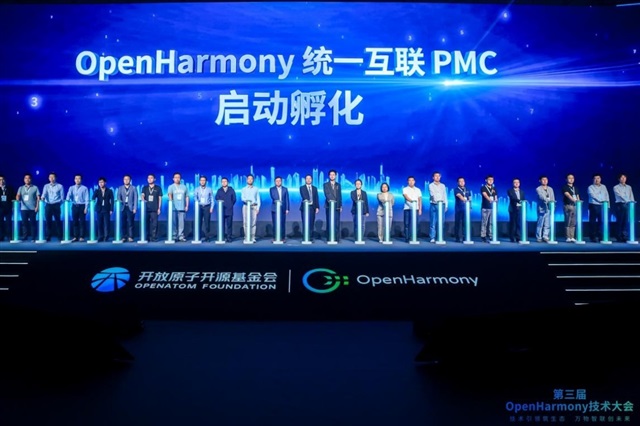
Songyan Power unveiled the OpenHarmony-based N2 at Huawei Developer Conference (HDC) 2026, calling it the industry's first OpenHarmony consumer humanoid robot, TMTPost reported. The launch signals a shift from motion-control competition to operating systems, interoperability, and application ecosystems.
Chinese humanoid robots have won attention with martial arts, dancing, and acrobatics, but most remain isolated devices with weak links to phones, smart screens, home appliances, and education hardware — a "ecosystem island" problem that limits mass adoption.
OpenHarmony targets that bottleneck with a microkernel architecture and distributed soft bus, giving robot makers a shared software base for cross-device collaboration and reducing protocol adaptation, data conversion and repeated custom development.
Huawei released M-Robots OS 1.0 in April 2025 as an OpenHarmony-based robot operating system for distributed multi-robot collaboration. Version 2.0 followed in May 2026, supporting more than 20 robot forms, including biped humanoids, quadrupeds, and robotic arms, with products launched by D-Robotics, Saite Intelligent, Chuangxiang Future, and Deyee Medical.
At the conference, Songyan's OpenHarmony N2 demonstrated walking, running, dancing, cartwheels and voice control of smart-home devices. Other OpenHarmony-linked robots, including Songyan Power's Bumi and CETC 21st Institute's L1-Lite robot dog, showed tap-to-share photo transfer and cross-device voice interaction.
Songyan Power VP Tang Ziyang said OpenHarmony's microkernel, security and cross-terminal connectivity could turn humanoid robots into smart-home assistants for home control, education, companionship and interactive teaching. Securities Times said Songyan also launched a "100 people, 100 robots" developer plan, offering selected teams high-computing humanoid hardware, native SDKs, full development environments and support for Ubuntu and OpenHarmony.
Huawei's robot strategy echoes its EV playbook
Huawei's robot strategy echoes its EV playbook: it can shape the platform without building the final product. In autos, Huawei gained influence through components, Huawei Inside-style integration and smart-selection partnerships, using operating systems, intelligent hardware and standards without becoming a traditional carmaker.
OpenHarmony could play the same infrastructure role in humanoid robots. Developed by Huawei and incubated by the OpenAtom Foundation, it is the technical base of the HarmonyOS ecosystem and a public foundation for industry-specific applications.
The foundation already has scale: 140 million lines of code, more than 13,000 contributors, over 3,200 ecosystem partners and more than 1.3 billion connected devices. For consumer humanoid robots, that base could turn isolated machines into connected interfaces for homes, classrooms and daily-use scenarios.
Huawei is pushing OpenHarmony across cities, mobility, home appliances, audio-visual systems, healthcare and robotics, with the goal of "Intelligent Interconnection of Everything" — devices sharing a common software base across vendors and form factors.
Automakers intensify the humanoid race
Competition is accelerating. Omdia data show global humanoid robot shipments reached about 13,000 units in 2025, with the top six vendors all from China. Morgan Stanley has raised its 2026 China shipment forecast to 50,000 units from 28,000, its second upward revision this year.
China's humanoid robot market is forecast to reach US$2 billion in 2026 and US$15 billion by 2030, with annual shipments projected at 446,000 units, drawing automakers into the sector.
Nearly 20 major global automakers have entered humanoid robots through in-house development, investment or partnerships. BYD, Xpeng and Li Auto have accelerated development and mass-production plans this year.
Automakers raise the stakes with manufacturing discipline, supply-chain scale, embodied AI expertise and use cases from factories to smart cabins, making them formidable rivals to robot startups and platform providers.
Huawei's advantage is clear but not assured. OpenHarmony could become the software bridge that moves humanoid robots from showroom performances to daily-use scenarios. But unlike Huawei's deeper role in EV product definition, R&D and sales channels, OpenHarmony is still mainly an operating-system foundation. Its impact will depend on how quickly developers, robot makers and device partners turn the ecosystem into real applications.
Article edited by Jerry Chen