

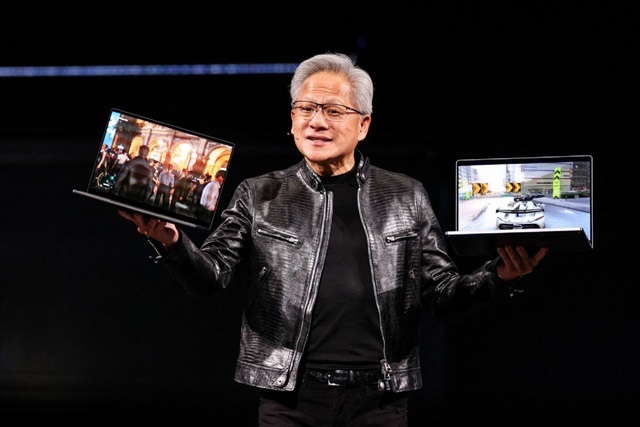
Nvidia and Microsoft have teamed up to launch RTX Spark, an AI PC superchip that could reshape personal computer architecture and intensify competition for AI leadership, according to South Korean media, including Edaily. The partnership is also raising concerns in South Korea about its role in the next phase of the global semiconductor and AI market.
South Korean observers say the alliance between Nvidia, a hardware giant, and Microsoft, which controls the world's dominant operating systems, could become one of the most powerful partnerships in history. They argue it may help redefine the next-generation AI market, even as South Korea continues to benefit from the global AI boom and the semiconductor supercycle.
South Korea faces pressure in the new AI order
Yet South Korea's position in this reshuffle appears increasingly uncertain. Some observers say the country is being pushed toward the margins of a technology order led by US giants, leaving it mainly as a supplier of components. Samsung Electronics and SK Hynix have been gaining ground in the high-bandwidth memory, or HBM, market, but that role is still seen as a lower layer of technical capability that can be replaced.
Digital Times reported that Samsung was absent from the list of partners for the AI PC launch and was also excluded from the manufacturing ecosystem for RTX Spark, the consumer AI PC superchip unveiled by Nvidia, MediaTek, and Microsoft. Production of RTX Spark has shifted to the TSMC and MediaTek ecosystem.
The broader concern is that if global technology companies accelerate in-house AI chip development to reduce Nvidia's influence and partner with companies such as Qualcomm, South Korea's memory-heavy position could also come under pressure. The rise of Chinese semiconductor makers is adding to those worries.
Software dependence and strategic risks
Analysts say the more serious issue is the possible loss of AI sovereignty in software and services. If South Korea's AI infrastructure becomes dependent on the operating system and chipset ecosystem built by Nvidia and Microsoft, some argue this would mean giving up a major source of future growth.
Without an independent AI ecosystem that supports South Korea's language, culture, and cybersecurity requirements, the country could end up in a subordinate position, paying platform fees and relying on external companies. In a period of rapid global AI restructuring, that outcome would amount to an economic setback, according to industry sources.
For that reason, some industry voices say South Korea cannot simply align itself with Jensen Huang's broad AI strategy. Instead, they argue that it should build "detour alliances" with companies such as Google, Meta, and Amazon, which are also developing chips and trying to reduce dependence on Nvidia.
Industry sources also say South Korea needs to move quickly to combine its cost-effective neural processing units, or NPUs, with small language models, or sLLMs, to target niche markets.
Analysts describe the Nvidia-Microsoft-led shift in the AI map as a survival test for South Korea. If its industries cannot integrate more quickly into the global ecosystem, the country risks becoming a bystander in the wider reordering of AI power.
Article translated by Jingyue Hsiao and edited by Jerry Chen
