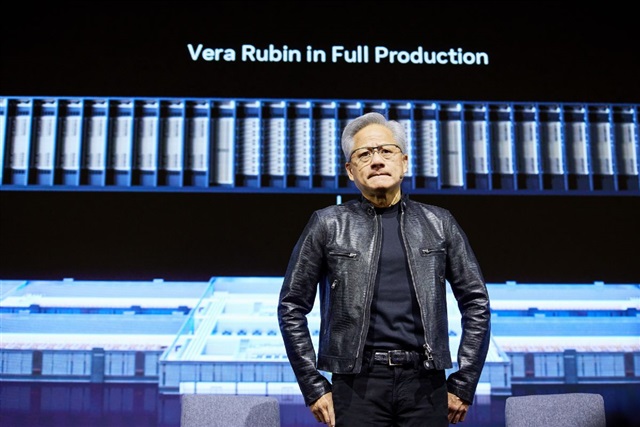
When Jensen Huang was asked in Taipei about Samsung Electronics' recent labor dispute, the Nvidia chief executive offered a characteristically direct response.

Huang said he believes employees should be compensated as generously as possible, a principle he described as central to Nvidia's management philosophy. He added that the company strives to pay its workforce at the highest level it can sustain, reflecting his long-held view that attracting and retaining top talent requires exceptional compensation.
The remark, delivered days before a scheduled visit to South Korea, quickly resonated across the technology industry. It underscored a management philosophy Huang has long championed: in a business driven by innovation, exceptional talent is the most valuable asset a company can possess.
Newly disclosed salary data suggest he has largely put that philosophy into practice.
According to compensation records compiled by Business Insider from publicly available filings, some Nvidia employees receive annual base salaries approaching half a million dollars. Those figures do not include stock awards, bonuses, or other incentives that have become increasingly valuable as Nvidia's market capitalization has soared.
The timing of Huang's comments was notable. Samsung had recently emerged from a tense labor standoff after union leaders threatened the company's first large-scale strike over wages and bonuses. While management and labor ultimately reached an agreement, the episode highlighted a growing debate across the technology sector: how much should companies pay to attract and retain the talent powering the AI era?
At Nvidia, the answer appears to be: whatever it takes.
Beyond the chip
The company's compensation data reveal something equally important: the highest-paid employees are not confined to chip design.
That distinction offers a window into how Nvidia views its future.
For decades, semiconductor companies derived their value primarily from manufacturing expertise and hardware performance. Nvidia still pays handsomely for those skills. ASIC engineers, physical design engineers, verification specialists, and mixed-signal designers remain among the company's most highly compensated employees. Some ASIC engineers earn base salaries as high as US$368,000 annually.
But the company's most lucrative roles increasingly extend far beyond silicon.
Software engineers can earn as much as US$391,000 a year in base salary. Principal software engineers and principal systems software engineers can exceed US$430,000. Architecture directors approach US$490,000.
Software as a moat
The trend reflects Nvidia's transformation from a chipmaker into something much larger.
Its software ecosystem — particularly CUDA and the growing suite of AI development tools built around it — has become one of the company's most powerful competitive advantages. Nvidia no longer sells only processors; it sells an integrated computing platform.
That shift is equally evident in artificial intelligence research.
Senior AI researchers and algorithm engineers rank among Nvidia's highest-paid employees. Top AI algorithm specialists can command salaries exceeding US$470,000 annually, while principal research scientists earn comparable compensation.
The logic is straightforward. Modern AI competition is no longer determined solely by hardware performance. Advances in model architectures, training techniques, and inference workloads increasingly shape how future chips and computing systems must be designed. Engineers who understand those emerging demands help define Nvidia's next generation of products.
The customer layer
Just as striking is Nvidia's willingness to pay premium salaries for customer-facing technical roles.
Product managers, solutions architects, developer-relations leaders, and deployment specialists occupy prominent positions within the company's compensation structure. Some developer-relations executives earn base salaries exceeding US$470,000.
Those positions reflect another reality of the AI boom: customers are no longer simply buying chips.
Cloud providers, AI laboratories, governments pursuing sovereign AI initiatives, and enterprise customers increasingly require complete computing infrastructure. Product managers help define those systems. Solutions architects integrate them into customer operations. Developer relations teams ensure that software developers continue to build applications within Nvidia's ecosystem.
Retention as a metric
The company's compensation priorities help explain another statistic frequently cited by Huang.
Despite the demanding culture that has become part of Nvidia lore, employee turnover remains remarkably low. According to the company's latest annual report, overall attrition was approximately 2.5% in fiscal 2025. Roughly one-fifth of employees have been with the company for at least a decade, while about two-fifths have remained for more than five years.
More than 30 years after founding Nvidia, Huang has transformed the company from a graphics-chip designer into a provider of AI infrastructure.
Within that infrastructure, chips provide computing power, networking determines the scale of AI clusters, software governs efficiency, researchers anticipate future workloads, and customer-facing teams help deploy systems at scale.
The map of priorities
The lesson embedded in Nvidia's pay structure is revealing. Compensation often serves as a map of corporate priorities.
And at Nvidia, some of the largest paychecks are going not only to the engineers who design chips, but also to the architects, software developers, AI researchers, and platform builders responsible for turning those chips into the foundation of the AI economy.
Article translated by Elaine Chen and edited by Jerry Chen