
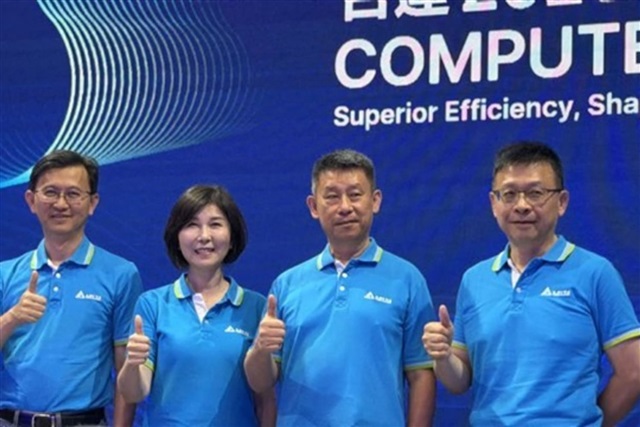
Delta Electronics warned that existing AC-DC power architectures will face fundamental challenges within the next one to two years as AI server rack power approaches megawatt levels, and said high-voltage direct current power designs are emerging as the key solution. The company announced the PowerCycle MW-class HVDC supply that supports 800V and ±400V architectures and uses flexible rack deployment of power and battery backup modules to optimize space, cooling, resilience, and scalability.
The company's executives said single-rack power demand is quickly nearing 1 MW, roughly the consumption of 2,000 household refrigerators, and that traditional 50V distribution faces impractical currents and cabling volumes. They argued that transitioning to 800V HVDC was inevitable and that Delta had developed systems to address the shift, including rack-level layouts to reduce internal conversion stages and improve thermal management.
Solid-state transformers were identified as a central element of the HVDC architecture. According to the company, these devices can convert medium-voltage AC directly to 800V DC in a single step, eliminating multiple intermediate conversions and achieving conversion efficiency of as high as 98.5%. The design is modular and supports parallel expansion with a planned maximum system capacity of up to 10 MW.
The company reported prior SST deployments in DC fast-charging and industrial settings, with production-scale implementations in data centers in China and ongoing testing with a major US cloud service provider. It noted that the technical hurdles are limited but that safety and regulatory certifications must be completed to match different customer and site requirements.
At the rack power-distribution level, the company described high-efficiency converters that step 800V directly to 50V or 12V, delivering 12–15 kW per unit to supply chips directly and reduce internal conversion stages. For physical and edge AI use cases, the company said it is applying digital-twin technology built on the Omniverse platform across factories, buildings, and transport, with deployments on an AI server power line in Thailand and claims of up to 20% energy savings in smart-building scenarios while maintaining occupant comfort.
Article edited by Jerry Chen