
CONNECT WITH US
Sign out

Taiwan's cybersecurity market shifts toward managed services as ransomware pressure mounts

Chong Jing, Taipei
0

Credit: DIGITIMES

For many Taiwanese businesses, cybersecurity still means buying a router and moving on. That gap between perception and exposure has become expensive — and increasingly hard to ignore. Speaking at CYBERSEC 2026 in Taipei, executives from Zyxel Group subsidiaries Zyxel Networks and Zyell Solutions described an industry in transition: from one-time hardware purchases toward continuous managed protection, and from conventional encryption toward systems designed to withstand quantum-era threats.

A false sense of security

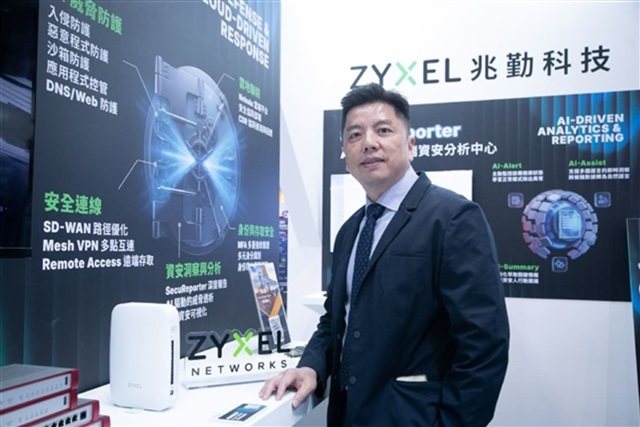
Zyxel Networks president Ken Tsai said many Taiwanese small and medium-sized enterprises (SMEs) still prefer to purchase network equipment outright, assuming no further spending is needed once it's installed. The reality is different. Network infrastructure has become a primary cyberattack target.

"If hackers want to infiltrate a local area network, they must first breach the network equipment," Tsai said.

Companies that skip regular software updates leave their devices exposed. When patches don't arrive in time, compromised hardware can effectively become an open gateway — much like an access-control system that any attacker can unlock.

Regulation nudges the market

Taiwan lags Europe and the US in the adoption of subscription-based security services. Tsai attributed this partly to a market still in an education phase, though the gap is narrowing. Antivirus platforms and threat-intelligence databases lose effectiveness without continuous updates, and businesses are gradually coming to terms with that.

Regulatory pressure is helping. Taiwan's listed companies are now required to disclose cybersecurity governance practices in sustainability reports, pushing enterprises to fold software updates, security subscriptions, and ongoing maintenance into standard management processes.

SMEs remain the most vulnerable segment. Many lack dedicated IT personnel and face no formal compliance requirements — conditions that make them frequent ransomware targets. When attacks hit, the choices tend to be stark: pay the ransom or suspend operations. Tsai said cybersecurity spending is increasingly being treated as a form of insurance rather than a discretionary expense, a mindset shift that is driving more interest in managed service providers (MSPs).

The managed services gap

Taiwan has been slower than Western markets to adopt managed security services, though Tsai said momentum is building. Telecom operators' anti-hacking and managed cybersecurity offerings have helped expose local customers to the "equipment plus service" concept.

Zyxel Networks is positioning SMEs as the next major growth opportunity in this space. The company expects rising ransomware incidents and compliance demands to push more organizations toward outsourced, continuously managed protection — though the market remains at an early stage.

AI governance, an overlooked risk

Tsai also pointed to a less-discussed category of exposure: AI agents. As enterprises deploy AI-powered assistants and automation tools, access governance can no longer focus solely on employees. It needs to account for what AI agents are themselves authorized to access and execute.

Incidents are already occurring. Internal AI agents with excessive privileges have inadvertently deleted enterprise databases. Tsai said AI-related risks have moved from theoretical to operational, and that security policies have not yet caught up.

The quantum deadline

Quantum computing is adding a longer-term dimension to the pressure. Zoran Po, vice president of Zyell Solutions, said his company has been integrating post-quantum cryptography (PQC), one-way gateway technologies, and AI analytics engines into products designed for sensitive, cross-domain, and military-grade environments.

Commercial quantum computing is not yet a reality, but the timeline is compressing. IBM has publicly stated a goal of delivering a large-scale fault-tolerant quantum computer by 2029 — a target that, if met, could render widely used encryption standards such as RSA and ECC vulnerable.

Migration cannot wait

Taiwan's government has stepped up efforts to encourage migration toward quantum-resistant cryptographic systems. Po's position is that enterprises should not wait for the threat to materialize before acting. PQC transition is a long-term process, and organizations that delay may find themselves exposed before they are ready.

Zyell Solutions works primarily with clients in defense, utilities, smart manufacturing, and healthcare. Po said those customers have grown considerably more sophisticated in their security planning in recent years — increasingly adopting layered defense architectures that incorporate zero-trust frameworks, identity authentication, and PQC migration as parts of a unified long-term strategy, rather than treating security as a collection of standalone products.

Article translated by Willis Ke and edited by Jerry Chen