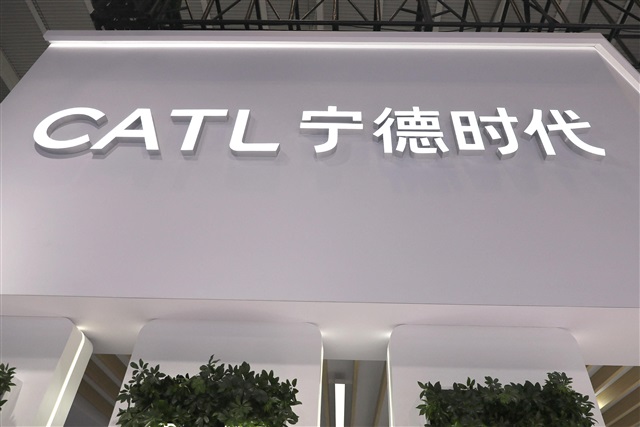
China's dominant battery manufacturer, CATL, is accelerating its push to reshape the global electric vehicle (EV) landscape with a sweeping technology rollout that spans ultra-fast charging, high-energy-density systems, sodium-ion chemistry, and a unified charging-and-swapping infrastructure.
At its Super Technology Day in Beijing on April 21, according to reports by The Securities Times and Sina, CATL unveiled a broad portfolio of next-generation products, including the third-generation Shenxing Superfast Charging Battery, third-generation Qilin Battery, Qilin Condensed Battery, second-generation Freevoy Super Hybrid Battery, and the Naxtra sodium-ion battery. The company also introduced a fully integrated supercharging and battery-swapping solution designed to support multiple energy replenishment scenarios across different mobility use cases.
Ultra-fast charging moves toward "six-minute full charge"
The centerpiece of the announcement was the third-generation Shenxing battery, which CATL said delivers an equivalent 10C charging rate and peak performance of 15C, among the highest in the industry.
The system can reportedly charge from 10% to 35% in one minute, reach 80% in 3 minutes and 44 seconds, and hit 98% in 6 minutes and 27 seconds, signaling what CATL describes as a move toward a "six-minute full charge era."
Performance in extreme environments was also highlighted. At -30°C, the battery can charge from 20% to 98% in about nine minutes, supported by self-heating and thermal management technologies designed to stabilize performance in harsh conditions.
CATL also emphasized a hybrid energy model combining ultra-fast charging with battery swapping, enabling vehicles to either recharge or exchange batteries depending on infrastructure and user needs.
Expanding platform strategy: high-density batteries and new chemistries
Alongside Shenxing, CATL introduced the third-generation Qilin Battery and Qilin Condensed Battery, extending its high-energy-density architecture across its product ecosystem.
According to 21CBH, the Qilin Condensed Battery uses ultra-high-nickel cathodes and silicon-based anodes to achieve energy densities of 350 Wh/kg and 760 Wh/L. The company claims this enables electric vehicles to reach up to 1,500 kilometers of range while significantly reducing battery weight and volume compared with conventional lithium iron phosphate systems.
Originally developed in 2023 for electric aviation applications, the condensed-matter technology is now being adapted for passenger vehicles, reflecting CATL's broader strategy of cross-sector technology deployment.
Diversification into sodium-ion and hybrid systems
CATL also introduced the Naxtra sodium-ion battery, aimed at reducing reliance on lithium resources and improving cost efficiency and low-temperature performance.
In addition, the second-generation Freevoy Super Hybrid Battery targets hybrid-electric vehicles, supporting demand for flexible powertrain solutions that combine internal combustion and electrification.
Integrated charging and swapping ecosystem
Beyond individual battery innovations, CATL unveiled a fully integrated supercharging and battery-swapping network designed to merge fast-charging infrastructure with swap stations into a unified energy replenishment system.
The company said this platform is intended to support diverse vehicle types and usage scenarios, optimizing energy access based on regional infrastructure and operational needs.
Strong financial and strategic momentum
CATL's technological expansion comes alongside strong financial performance. The company reported 2025 revenue of CNY423.7 billion (approx. US$62.1 billion) and net profit of CNY72.2 billion, both up sharply year-over-year. In the first quarter of 2026, revenue rose 52.5% to CNY129.1 billion, while net profit increased 48.5%.
The company is also moving upstream into critical minerals, recently announcing a CNY30 billion investment vehicle, Times Resources Group, to secure global raw material supply chains.
With its latest announcements, CATL is positioning itself not only as a battery manufacturer but as a full-stack energy infrastructure provider spanning chemistry innovation, charging systems, battery swapping, and global supply chain integration.
Article edited by Jack Wu