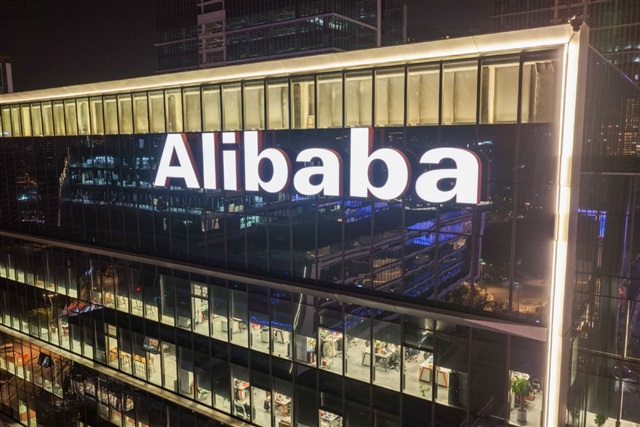
Alibaba Group Holding is reorganizing its artificial intelligence operations, creating a new business unit to integrate its AI services and development efforts as the Chinese technology giant looks to accelerate the commercialization of its AI technologies.
The new division, named Alibaba Token Hub (ATH), will bring together core AI teams and products under a single structure led directly by CEO Eddie Wu, according to statements and internal communications reported by Bloomberg, Reuters, and the South China Morning Post.
Merging the pieces
The newly formed unit integrates several existing Alibaba teams, including Tongyi Laboratory, the Model-as-a-Service (MaaS) business line, the Qwen business unit, Wukong, and AI Innovation.
Tongyi Laboratory develops Alibaba's Qwen series of foundation models, while Wukong builds AI-enabled enterprise workflow tools for Alibaba's DingTalk workplace platform. The AI Innovation unit focuses on exploring new AI applications.
Alibaba is also moving the research team behind its flagship Qwen models, its consumer-facing application division, and other major AI products into the new unit. ATH will also oversee the DingTalk collaboration platform and devices under the Quark brand, including smart glasses.
"ATH is built around a single organizing mission: create tokens, deliver tokens, and apply tokens," Wu said in a memo to employees. "I will lead ATH directly, with a mandate to drive strategic coordination across our AI businesses, embed AI deeply into how we work, and preserve the agility that lets us move fast."
Talent shakeup at the top
The restructuring follows scrutiny over Alibaba's AI strategy after the departure of key personnel from its Qwen development team. Lin Junyang, head of the Qwen AI model division, left the company earlier in March, marking the third senior executive exit from the team so far this year.
Tongyi Laboratory has also seen departures among senior engineers. In response, Wu told staff that a task force would "jointly coordinate group-wide resources to accelerate foundational model development."
To strengthen its research capabilities, Alibaba has recruited Zhou Hao, a former senior research scientist at Google DeepMind, to lead research on post-training for AI models.
Chasing commercial returns
The creation of ATH underscores Alibaba's efforts to sharpen the commercial prospects of its AI technologies. The restructuring is intended to accelerate collaboration between research, product development, and design teams while refining the company's sales approach to enterprise customers.
The division's name refers to the "token," the basic unit of computation used by large language models. Wu said the AI industry is approaching an "inflection point" in artificial general intelligence (AGI), where advances in large models could enable billions of AI agents to perform a growing share of digital work.
Alibaba's push for monetization comes amid intensifying domestic competition. Chinese AI companies, including Alibaba and MiniMax, face greater difficulty generating profits than Western rivals such as OpenAI, partly because Chinese consumers are generally less willing to pay for software subscriptions.
Many Chinese AI models are also open source, contributing to a price war. Leading Chinese models — including DeepSeek, Qwen and Zhipu's ChatGLM — currently cost roughly 10 to 20 times less than comparable US offerings.
Alibaba is scheduled to report its quarterly earnings on March 19.
Article edited by Jerry Chen