
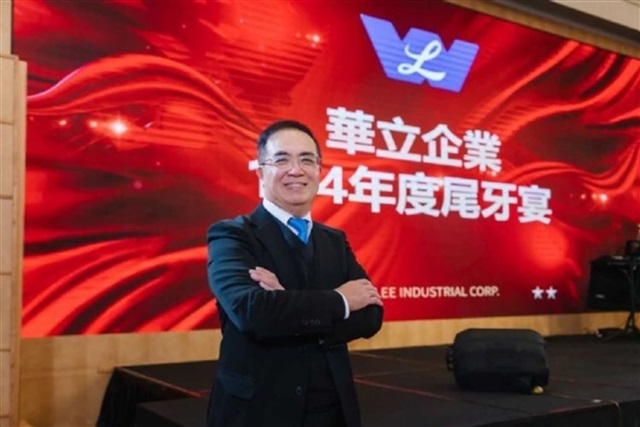
Semiconductor materials and equipment supplier Wah Lee Industrial reported record-high cumulative revenue for the first two months of 2026, fueled by strong demand for artificial intelligence (AI) servers, high-performance computing (HPC), and advanced semiconductors. Benefiting from robust AI server orders and the gradual rollout of new production capacity for 800G switches, revenue related to its copper-clad laminate (CCL) business has also grown multifold.
Wah Lee posts record-high revenue
For full-year 2025, Wah Lee posted consolidated revenue of NT$78.19 billion (approx. US$2.46 billion), with gross profit reaching NT$6.31 billion and operating income totaling NT$3.12 billion, both setting record highs. Net profit before tax stood at NT$3.45 billion, marking the highest level in four years.
In the first two months of 2026, cumulative revenue hit NT$14.23 billion, a new record high. Notably, February 2026 revenue set a new high for the same period despite fewer working days due to the Lunar New Year holiday, reflecting strong end-market demand.
Strong AI, HPC demand drives growth
In the semiconductor sector, Wah Lee highlighted that its major customers have significantly increased capital expenditures amid strong demand for AI and HPC, with investments reaching record highs and focusing on advanced process and packaging capacities.
Benefiting from these industry trends, Wah Lee said shipments of key materials — including photoresists, polishing slurries, advanced packaging materials, and electronic-grade specialty gases — have been robust, driving high double-digit growth in semiconductor materials-related revenue.
ABF substrate demand soars
Regarding the Ajinomoto build-up film (ABF) substrate industry, the AI-driven upcycle differs from past cycles led by consumer electronics demand, such as PCs, exhibiting less volatility and improved visibility.
As demand for AI GPUs, application-specific integrated circuits (ASICs), and high-speed computing continues to rise, Wah Lee noted that ABF substrate shipments have increased and demand has surged, driven by requirements for larger sizes and higher layer counts. The company added that the high-resolution dry film it introduced has successfully secured major orders from several leading customers, driving high double-digit growth in revenue from related products.
Expansion into LEO satellite applications
In the printed circuit board (PCB) market, Wah Lee has expanded into low-Earth orbit (LEO) satellite applications. Because satellite circuit boards must withstand extreme temperature cycling, intense vibrations, and long-term operating conditions, material and manufacturing process requirements are highly stringent. The company's high-resolution dry film has entered the core supply chains for LEO satellite boards, and its footprint has expanded into the Southeast Asian market.
Cloud service providers continue ramping up capital expenditures, while demand for specialized chips used in AI training and inference is rising rapidly, leading to tight supply of high-end CCL substrates. With strong supplier support, Wah Lee has successfully entered the supply chains of several major global server PCB manufacturers.
Supplying key materials for top DDR slot connectors
AI-driven upgrades in the memory industry have prompted major memory manufacturers to phase out DDR4 products, shifting production capacity toward advanced processes such as DDR5 and high-bandwidth memory (HBM). This transition has led to tighter DDR4 supply and rising prices.
Wah Lee said the high-performance engineering plastics it supplies offer excellent heat resistance and serve as key materials for DDR slot connectors, with its customers including the world's top three DDR slot connector manufacturers. As supply and demand in the DDR4 market tightens and both prices and shipment volumes rise, revenue from related materials is also expected to continue growing.
Article translated by Eifeh Strom and edited by Jerry Chen