

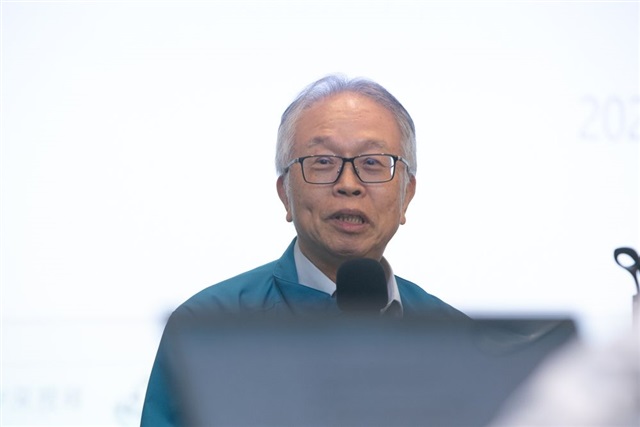
Memory design IC company Elite Semiconductor Microelectronics Technology (ESMT) reported a fourth-quarter 2025 profit of NT$1.033 billion (US$32.5 million), up 394.75% year-on-year and the highest quarterly level in four years, helping the company return to profitability for the full year. Chairman M.C. Chang said that this memory cycle is the most intense in the past 30 years. Contract prices in the first half of 2026 are expected to rise by at least multiples, and the benefits from price increases are still only in the early stages of the uptrend. Therefore, the top priority this year will be securing additional production capacity from partners.
In 2025, DDR4 faced severe shortages, and prices surged six to seven times. Although ESMT has relatively low exposure to DDR4, its main products, DDR3 and DDR2, also joined the price uptrend starting in the fourth quarter of 2025. Sources indicate that ESMT's contract prices may rise two to four times. Chang responded that DDR3/DDR2 price increases are still in the early stages and that price hikes will vary depending on customers. Such increases may occur with small-volume customers, but overall contract prices cannot jump two to three times at once, as customers need time to accept and digest the higher costs.
However, compared with the fourth quarter of 2025, contract prices in the first half of 2026 will at least double, with quarterly increases exceeding 50%.
AI demand remains strong, and high-bandwidth memory (HBM) is crowding out traditional DRAM capacity. Limited production capacity has caused shortages to spread from DDR5 and DDR4 to DDR3, DDR2, and Flash. AI applications are expected to gradually expand beyond the cloud market, while demand for consumer products remains stable. Order visibility for customers currently ranges from three to six months, and most customers are more concerned about shortages than about prices.
DRAM margins on the rise
Like other Taiwanese memory companies, such as Nanya Technology and Winbond Electronics, which have gradually shifted toward higher-capacity DDR4 and above, or customized DRAM products, ESMT noted that product overlap with competitors has been very high in the past. However, the shrinking DDR3 production capacity of older-generation products will help capture order transfers in the future, creating a significant opportunity.
Since memory is a core component of electronic products, end products cannot ship without it. Some manufacturers have had to purchase memory at high spot prices to maintain shipments. As a result, revenue growth in the fourth quarter of 2025 mainly came from rapid increases in spot prices, while contract price adjustments were relatively limited. Because known good die (KGD) and contract prices account for about 70% of revenue, price adjustments typically lag the market by about one quarter, meaning price increases will continue to be reflected in 2026.
ESMT believes that with supply and demand remaining tight, gross margins are expected to improve quarter by quarter. DRAM will perform better than Flash products due to the more severe shortages. However, as wafer foundry and packaging/testing costs rise, cost pressures will increase significantly starting in the third quarter of 2026. Although not doubling, the increase will still be considerable. Product prices can still support procurement costs, but whether gross margins can continue improving remains to be seen.
Regarding production capacity, ESMT said that sales volume is currently limited by wafer foundry capacity, making significant expansion difficult as all companies are competing for wafer starts. Compared with shipments of about 130 million ICs in December 2025 and about 1.5 billion ICs for the full year, the company expects 2026 capacity to remain roughly flat with 2025 through diversified supply. Revenue growth will mainly come from price increases rather than shipment volume.
Inside the product mix
In terms of product structure, DRAM accounts for about 55% of ESMT's revenue, with DDR2 and DDR3 as the main products totaling nearly 40%. SDRAM accounts for less than 10%, DDR1 for a low single-digit share, and DDR4 also less than 10%. Flash and MCP multi-chip packaging products together account for nearly 40%, while audio products declined slightly in 2025 to just under 10%.
Looking at chip volume, total shipments in 2025 reached about 1.5 billion ICs. NOR Flash accounted for over 30% of chip shipments, SDRAM over 10%, DDR2 and DDR3 combined about 30%, audio ICs about 10–15%, NAND about 5%, and packaged products less than 5%.
Regarding inventory, ESMT's inventory value fell to NT$7 billion by the end of the fourth quarter of 2025, down from about NT$7.9 billion at the end of the first quarter of 2025. This includes wafers and work-in-progress inventory within the production process rather than just finished goods. Inventory value in 2026 is expected to remain around NT$7 billion.
Memory supercycle echoes 1994 PC boom
According to Chang, this memory supercycle is the "most intense in 30 years" and will last longer than the supply shortage caused by the pandemic in 2021. It is mainly driven by structural capacity crowding from AI applications, with order fulfillment currently at only about 80%. The situation resembles the long-term demand surge driven by the rise of PCs in 1994–1995.
ESMT is confident that with supply contraction and rising prices in 2026, operational momentum will remain positive. Performance in the first half of 2026 is expected to surpass that of the same period in 2021 and may even exceed the peak performance of the entire year of 2021 in the first half alone. However, the biggest challenge will still be securing sufficient wafer foundry and packaging/testing capacity to support market demand.
ESMT's full-year 2025 revenue reached about NT$14.575 billion, up about 8% year-on-year, returning to profitability as prices recovered in the fourth quarter of 2025. The fourth-quarter gross margin rose to 32.33%, with net profit after tax of NT$1.033 billion, up 7,535.43% quarter-on-quarter and 394.75% year-on-year. Quarterly EPS reached NT$3.68, while full-year EPS was NT$0.87.
Contract prices for the third quarter of 2026 have not yet been finalized. However, with the memory market recovering and prices rising, the company expects operational performance to continue improving in 2026.
Article edited by Jerry Chen