
CONNECT WITH US
Sign out

Automaker leadership reshuffle deepens strain on Europe's tier 1 suppliers

, Taipei
0

Credit: AFP

Major automakers in Europe, the US, Japan, and South Korea have recently undergone significant executive changes, with nine leading carmakers replacing their chief executive officers (CEO) over the past year. The leadership shake-up reflects deep strategic shifts at the top and signals structural changes ahead for the automotive industry.

Established tier 1 automotive suppliers, however, are facing even greater pressure amid this upheaval. Unlike the leadership changes at automakers, the supply chain is confronting more immediate and severe survival challenges.

European automotive industry faces transformation pressures

Europe's automotive industry exemplifies these struggles, battered simultaneously by multiple crises. These include slower-than-expected electric vehicle (EV) adoption, intensifying global competition, and fragmented regulatory frameworks — forces collectively placing the entire industry under unprecedented pressure to transform.

Statistics from the European Association of Automotive Suppliers (CLEPA) show that this transition is already taking a significant toll on Europe's industrial ecosystem. It is estimated that between 2024 and 2030, up to 350,000 jobs could be lost across Europe's automotive supply chains, with approximately 104,000 workers already leaving their positions between 2024 and 2025 alone.

Sources familiar with the matter noted that this is not merely a cyclical economic fluctuation, but a structural adjustment driven by the gap between the pace of electrification and market demand, underscoring the heavy toll on European manufacturing amid rapid change.

German suppliers slash thousands of jobs

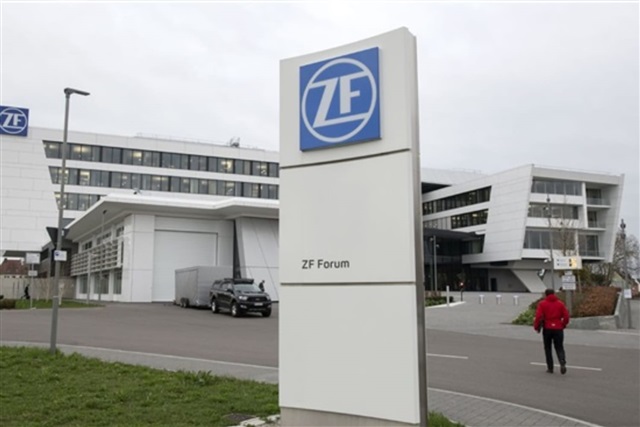
Several long-established German tier 1 suppliers have been among the first to be hit. Robert Bosch has announced plans to cut 13,000 jobs worldwide by the end of 2030. ZF Friedrichshafen will reduce about 7,000 roles in its electrification and hybrid divisions. Continental expects to eliminate more than 10,000 jobs, while Schaeffler Technologies aims to cut around 4,700 positions as progress in the electrification transition falls short of expectations.

These adjustments by major suppliers underscore the gradual erosion of Europe's appeal as a hub for automotive manufacturing.

Investment retreat amid weak profitability

Signs of investment withdrawal are also emerging across the industry. With profitability remaining weak, a survey by CLEPA revealed that about half of automotive suppliers plan to further scale back their production capacity in Western Europe over the next five years.

Currently, more than 75% of suppliers have profit margins below 5%, a threshold generally considered necessary to sustain long-term investment and next-generation research and development. When profitability falls below this level, companies face severely reduced ability to invest in technology and capacity upgrades.

Europe's ambitions to establish an independent battery supply chain are also facing setbacks. Of the 16 battery cell factories originally slated to be led by European companies, 11 have announced delays or cancellations.

Hybrids make a comeback

Faced with constrained supply-side investment and lower-than-expected demand and production for battery electric vehicles (BEV), European suppliers are revisiting hybrid technology as a transitional solution. They aim to balance internal combustion engine (ICE) vehicles and EVs to stabilize cash flow and mitigate transformation risks. For most companies, strategies have shifted from expansion to defense.

Meanwhile, the European Union (EU) is developing new industrial policy measures. The proposed Industrial Accelerator Act (IAA) aims to set a local content threshold of 70% for automotive production in the region, intending to strengthen the resilience of Europe's automotive supply chain while preserving more local employment opportunities.

Article translated by Eifeh Strom and edited by Jerry Chen